
Sacajawea PTA News
The happenings around Sacajawea
Upcoming SCPTA Listening Sessions with Superintendent Dr. Brent Jones
The Seattle Council PTSA is hosting a series of community engagements with Seattle Public Schools Superintendent Dr. Brent Jones now through May.
The Seattle Council PTSA is hosting a series of community engagements with Seattle Public Schools Superintendent Dr. Brent Jones. Please join us to share your voice with our district leader about safe and welcoming environments.
To register, please use the following links. ASL and closed captioning will be available at each listening session. Interpretation in each of the top 5 languages (Spanish, Somali, Vietnamese, Cantonese, and Amharic) is available as well. All listening sessions are 5:30PM to 7:30PM on the dates listed.
April 19: Native families
April 21: Multilingual families
April 25: Black families (Interpretation in Oromo and Tigrinya available in addition to the languages listed above)
May 2: Students with IEPs/504s
May 5: Students
May 9: Special Education families
May 16: General public
BLM at School Year of Purpose: Louise B. Miller and BASL
This month we are thinking about the ways many different identities can intersect in each of us.
Dear Sacajawea Community,
Versión en Español
Public harassment can leave you feeling helpless and afraid whether you are a witness or the target. The organization Right To Be (formerly Hollaback!) offers free interactive trainings to teach you how to intervene safely to stop harassment. Parent Equity Team is encouraging Sac families to save the date for the Bystander Intervention to Stop Xenophobic Harassment workshop hosted by Right to Be on April 20 at 5:00 p.m. Sign up here: https://zoom.us/webinar/register/WN_cTRjIlvKR7Wft3xD6S-6UA.
Our goal is to participate as a community to learn the skills needed to safely stop hate crimes and harassment. Parent Equity Team will also be hosting a Sacajawea-specific community debrief session, so we can review and discuss what we have learned together—keep an eye out for more details!
Louise B. Miller: A force for educational equity

This month we are thinking about the ways many different identities can intersect in each of us. We are celebrating both Women’s History and Deaf History Month, and highlighting an early pioneer of school desegregation, Louise B. Miller. In 1952, Ms. Miller, a Black mother, grew frustrated that she had to send her three deaf sons to a school far away from their home in Washington, D.C. She filed suit in federal court against the D.C. Board of Education to end the segregation that kept Black deaf children from being educated within the district.
On July 3, 1952, the U.S. District Court for the District of Columbia ruled in her favor in Miller v. Board of Education of District of Columbia, stating that Black students could not be sent outside a state or district to obtain the same education that white students could have within the state or district. Louise’s victory is considered a precursor to the 1954 Supreme Court decision in Brown v. Board of Education of Topeka.

Deaf schools were segregated throughout the country for decades, leading to the development of Black American Sign Language (BASL), a dialect of American Sign Language (ASL). Even though the legal segregation of Deaf schools has ended, about 50% of Black deaf Americans use BASL today. Nakia Smith, a Black deaf woman, has created videos that show some of the differences between BASL and ASL, including a preference for two-handed variants of signs. A video of Nakia and her grandfather signing together went viral, and she has continued to create videos that highlight BASL and its evolving history.
What can you do to learn more?
Talk to your students about the info presented above.
If you have 2 minutes, read Black Deaf Culture Through the Lens of History
If you have 3 minutes, watch How To Sign In BASL (Black American Sign Language)
If you have 5 minutes (or more!), read BIPOC Deaf Women in History
If you have 8 minutes, watch Celebrating and preserving Black American Sign Language
Dig Deeper
National Black Deaf Advocates
Louise B. Miller Memorial Project
#Deafwoke Podcast
Check out these books
Black Deaf Lives Matter: A fun coloring & activity book about Black Deaf life, history, culture & sign language, by Lissa D. Ramirez-Stapleton
My Deaf Friend Can Do Anything You Can Do, by Tanesha Ausby
Books to deepen your understanding of Black and Black Deaf experiences
With gratitude,
Sacajawea’s Parent Racial Equity Team
equity@sacpta.org
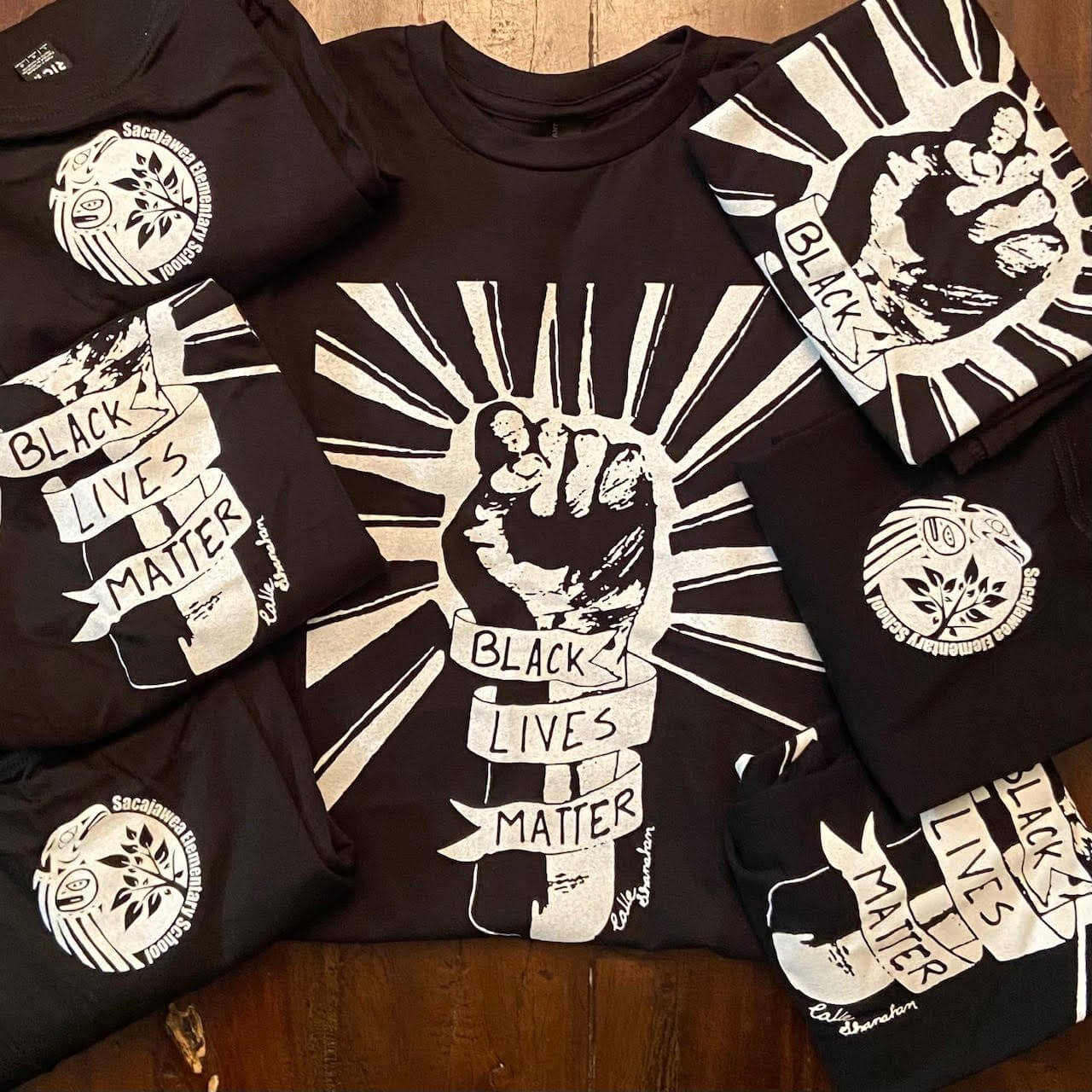
Black Lives Matter T-Shirts Still Available
Didn’t get this year’s Black Lives Matter T-Shirt? We still have youth and adult sizes available.
The PTA Equity Team still has youth and adult sizes available of this year’s Black Lives Matter T-Shirts. if you didn’t get yours or want to get one while supplies last, please reach out to John at jdelfeld@gmail.com. These are open to everyone, scholarships available.
The Sacajawea Hiring Committee Needs You
With our school budget process in full swing and anticipated staffing changes next year, we need trained parent representatives for our upcoming hiring committees.
With our school budget process in full swing and anticipated staffing changes next year, we need trained parent representatives for our upcoming hiring committees. The hiring process for 2022-23 starts in April, and the next monthly hiring training is online on Tuesday April 5th, from 4:00 – 5:30 PM.
In order to participate in a hiring committee, you must have engaged in this training within the last 3 years. If you haven’t completed the hiring training in the last 3 years and would like to participate, please sign up for this Interview training.
Let Principal Friesen know if you complete the training so she’ll know you are interested in being on a hiring team.
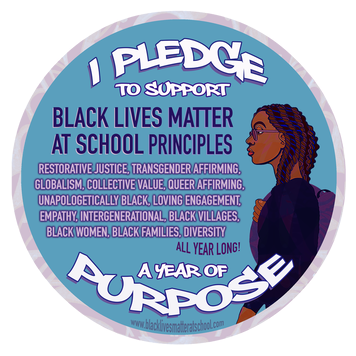
Black Lives Matter at School: 13 Principles
During the first week of February and coinciding with the start of Black History Month, school teams, students and educators throughout Seattle were encouraged to participate in Black Lives Matter at School Week of Action by learning about and discussing the 13 principles of the Black Lives Matter Movement.
Versión en Español
During the first week of February and coinciding with the start of Black History Month, school teams, students and educators throughout Seattle were encouraged to participate in Black Lives Matter at School Week of Action by learning about and discussing the 13 principles of the Black Lives Matter Movement. The goal of Black Lives Matter at School is to spark an ongoing movement of critical reflection, honest conversation and impactful actions in school communities to engage with issues of racial justice.

Explaining The Guiding Principles of Black Lives Matter at School
Black Lives Matter at School is a national committee of educators organizing for racial justice in education. This movement began in Seattle in 2016 when thousands of educators, and hundreds of families and students came to school on October 19th wearing shirts that said, “Black Lives Matter: We Stand Together.” Since then, the movement has grown to include more cities that are participating in affirming the lives of Black educators, students and families.
This year, you may have seen student worksheets relating to lessons that Sacajawea educators taught about the thirteen guiding principles of Black Lives Matter:
Monday: Restorative Justice, Empathy, and Loving Engagement
Tuesday: Diversity and Globalism
Wednesday: Transgender Affirming, Queer Affirming, and Collective Value
Thursday: Intergenerational, Black Families, and Black Villages
Friday: Black Women and Unapologetically Black
These are big ideas that can be challenging to talk about. Bringing 20 years of experience in early childhood education, teacher Laleña Garcia advises using age-appropriate language to talk about the principles and, when possible, to make connections to your child’s lived experience in your home, or out in the world (source: BLM at School):
Restorative Justice is the commitment to building a loving and sustainable community. When you hurt someone, “you can't just say, ‘Sorry,’ and walk away.… We have to help people when something happens to them, even if it was by accident.”
Empathy is one’s ability to connect with others by building mutual trust and understanding. “Think about how other people feel, because different people have different feelings.… Think about how you would feel if the same thing that happened to your friend happened to you.”
Loving Engagement is the commitment to justice, liberation and peace in all our interactions. Being fair and peaceful takes practice so we have to do it a lot to get better at it.
Diversity is the acknowledgment and celebration of differences and commonalities across cultures. There are many different ways that people live in the world, including how they eat, dress, listen to music, and more. It’s important to “have lots of different kinds of people in our community and that everyone feels safe.”
Globalism is our ability to see the Black global family that exists across the world, and how we are affected or privileged within different regions. “Globalism means that we are thinking about all the different people all over the world, and thinking about the ways to keep things fair everywhere.”
Transgender Affirming is the commitment to make space for our trans siblings by encouraging leadership, recognizing trans-antagonistic violence, dismantling cisgender privilege, and uplifting Black trans folk. “People know in their hearts and minds whether they are a boy, a girl, both, or neither. We call this gender identity. Gender identity is who we know ourselves to be.”
Queer Affirming is working towards a world without the belief that everyone is heterosexual unless told otherwise. “Everybody has the right to choose who they love and the kind of family they want by listening to their own heart and mind.”
Collective Value is the understanding that all Black lives matter, regardless of actual or perceived sexual identity, gender identity, gender expression, economic status, ability, disability, religious beliefs or disbeliefs, immigration status or location. “Everybody is important, and has the right to be safe and happy.”
Intergenerational is the belief that all people, regardless of age, have the capacity to lead and learn from each other. “It’s important that we have spaces where people of different ages can come together and learn from each other.”
Black Families is the commitment to family-friendly spaces that let caregivers fully participate in the community with their children. “It’s important to make sure that all families feel welcome.”
Black Villages is the disruption of Western nuclear family dynamics through the support of “villages” that take care of each other. “People who take care of each other… might be related, or maybe they choose to be family together…. Sometimes, when it’s lots of families together, it can be called a village.”
Black Women is the building of women-affirming spaces free from sexism, misogyny, and male-centeredness. “There are some people who think that women are less important than men. We know that all people are important and have the right to be safe and talk about their own feelings.”
Unapologetically Black is the affirmation that Black Lives Matter and that our love, and desire for justice and freedom are prerequisites for wanting the same for others. These principles will not be compromised in an effort to eliminate the discomfort that comes with dealing with race. “There are lots of different kinds of people and one way that we’re different is the color of our skin.…” Even though we’re different we need to treat all people fairly, “and that’s why we, and lots of other people all over the country and the world are part of the Black Lives Matter movement.”
What can you do to learn more?
Talk to your child about the principles they learned and what resonated with them.
If you have two minutes, read ArtSEA: Black history lights up Seattle’s Central District.
Dig deeper with these resources and books:
The 1619 Project: Born on the Water, by Nikole Hannah-Jones and Renée Watson. Find it at the Seattle Public Library.
Teaching for Black Lives, edited by Dyan Watson, Jesse Hagopian, Wayne Au. Find it at the Seattle Public Library.
Listen to The Land That Never Has Been Yet, a 12-part audio podcast where the hosts re-examine dominant narratives told in American history.