
Sacajawea PTA News
The happenings around Sacajawea
Black Lives Matter at School Year of Purpose: Student Activism
We're showcasing student activism to underscore the long-reaching effects of racial equity activism.
Versión en Español
We're showcasing student activism to underscore the long-reaching effects of racial equity activism. Whatever form of advocacy people engage in, working toward social justice results in positive impacts for individuals and their neighborhoods. Activism helps build connections among people and to their communities. It empowers people to create vibrant, thriving places to live.

Black Lives Matter Student Activist Awards
Schools also are integral to communities and forging healthy connections among students, families and organizations is crucial for healthy neighborhoods. When people feel connected to their community, they tend to be happier and more resilient. This is why Jesse Hagopian, a Garfield High School teacher and a founder of Black Education Matters Student Activist Award (BEMSSA), introduced the 2021 awardees by underscoring a common theme in the students’ activism:
“You knew and recognized and understood that school could not be dislocated from community, and so you really brought community into the school, and you brought the school into the community.”
The BEMSSA awards include a $1,000 stipend and are given to students who demonstrate “exceptional leadership in struggles for social, and against racism—especially with an understanding f the intersections with sexism, homophobia, transphobia, Islamaphobia, ableism, class exploitation and other forms of oppression—within their school or community.”
And now, a brief introduction to each of last year’s recipients:
KyRi Miller – Garfield High School, Class of 2021
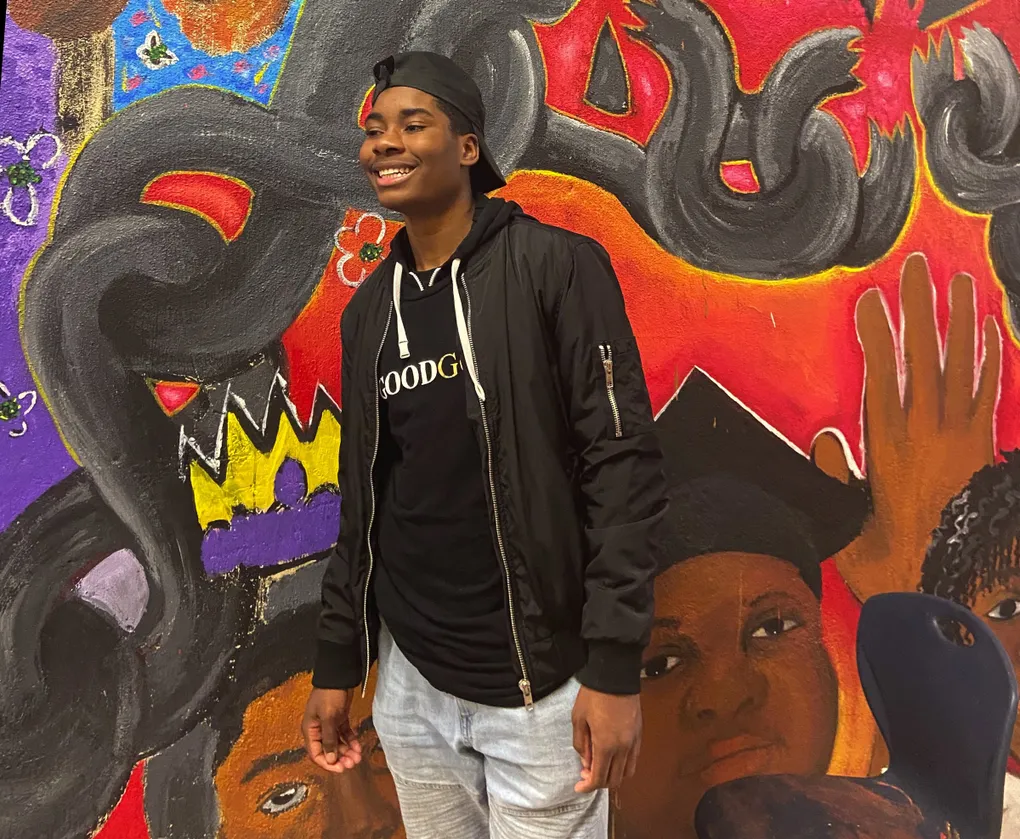
(Photo by LaCretiah Claytor)
KyRi Miller earned his award based on his organization and leadership of a Black Lives Matter at School assembly and mural on the walls of Garfield’s second-floor balcony. The mural illustrates Black history, the achievements as well as the injustices. For him, activism stems from being Black. His goal is to live his excellence and to defy Black stereotypes, particularly in an acting and directing career.
This fall, KyRi Miller started college at the historically Black Dillard University in New Orleans. You can find out more about this student activist by clicking the links below.
Aneesa Roidad – Ballard High School, Class of 2020
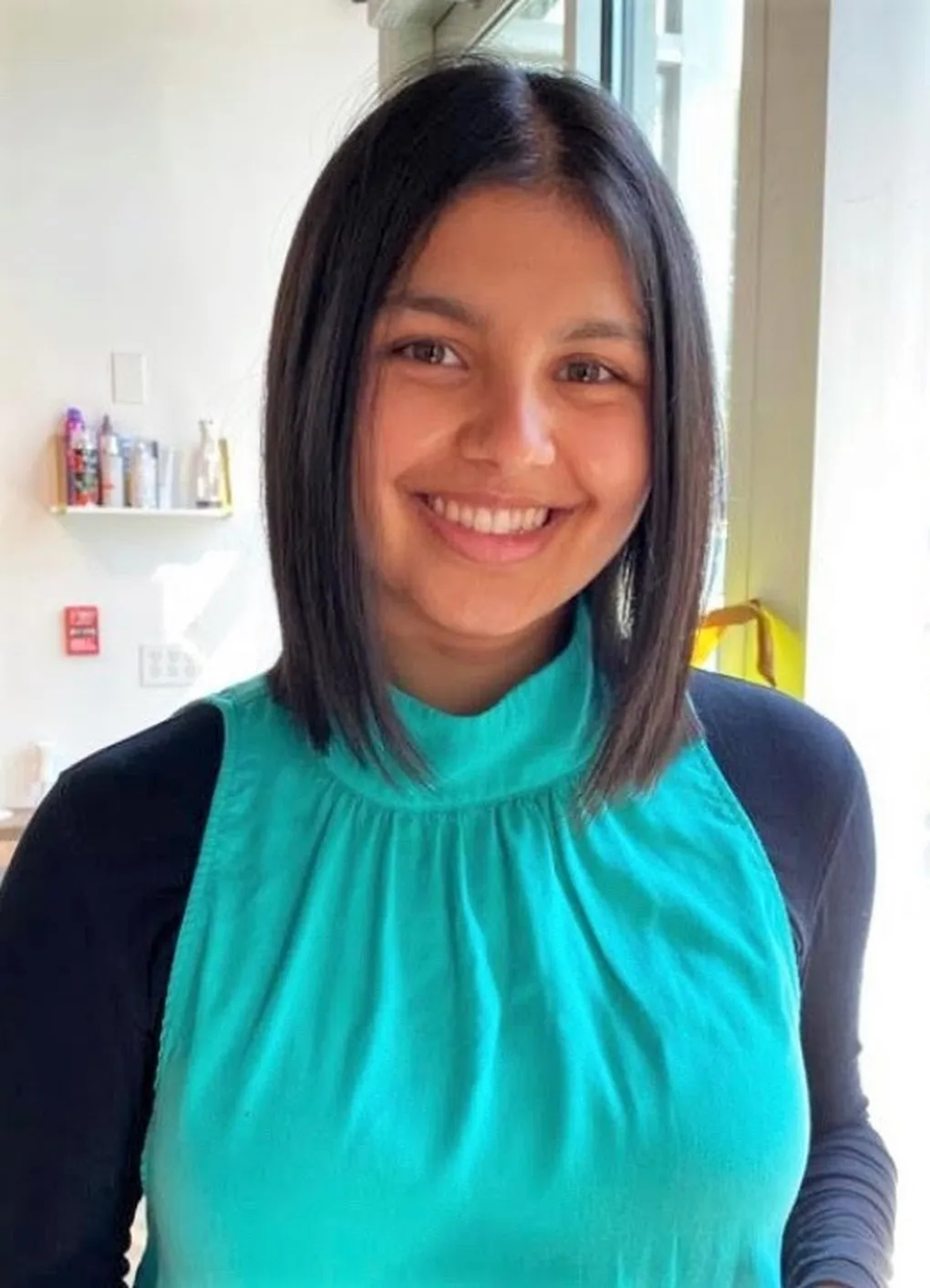
(Photo by Lena Roidad)
Roidad moved to Seattle from Pennsylvania in her sophomore year. Her heritage as a Pakistani American sparked her interest in showing solidarity with people who do not have equal access to opportunities. She was particularly interested in changing the curriculum and culture in her school. Her leadership role in forming the Washington NAACP Youth Council reflects the determination to foment educational justice.
After a gap year to continue working with NAACP Youth Council, Aneesa Roidad began at Harvard University this fall. Read more about her activism by clicking the links below.
Mia Dabney – Cleveland STEM High School Student

(Photo by Mia Dabney)
Mia Dabney helped create Seattle Public Schools Board Policy 1250 that passed in spring 2021 and mandates that three, five or seven students will sit on the school board each year. The goal is to better represent the diversity of the district. Her activism stems from her experience being a young Black woman in Seattle and the world. Her parents imbued the core values of education and love that Dabney uses to embrace her inner strength, even when she is afraid people won’t listen or necessarily understand what she is trying to accomplish.
Mia Dabney started her senior year at Cleveland High School this year. She plans to pursue a career in medicine. Find out more about her activism by clicking on the links below.
Invitation
Please share your family’s and/or child’s experience with activism. Are you engaged with a local organization or want to share resources? We’ll gather responses and share them with our school community. Please indicate if it’s okay to follow up with you if we have any questions.
equity@sacpta.org
More about the student activists highlighted in this newsletter (9.6 minutes): KyRi Miller, Aneesa Roidad, & Mia Dabney Win 6th Annual BEMSAA Awards | South Seattle Emerald
More about the Miller, Roidad and Dabny (7.5 minutes): Exceptional leaders for social change: Black educators group honors Seattle student activists | The Seattle Times
Dig deeper with these resources:
NEA BLM at School Resources
Black Education Matters outlines how and why the student activist awards were created. And includes list of winners from past years.
Heritage Potluck Community Cookbook - LAST CALL
View the first draft of the Heritage Potluck Community Cookbook. Find your recipe or have a chance to add your recipe. Hurry before its too late!
Thank you to all the families that have contributed to the cookbook.
Here’s a sneak peek of the Heritage Potluck Community Cookbook.
There is still time to add your family’s recipe to the cookbook! Sacajawea Equity Team is accepting recipes until 2/17. Please give them to the school office or your students teacher.
If after viewing the sneak preview you would like to have your child’s (or your family’s) name on the recipe, please let Lori Phipps (lphipps01@gmail.com) know which recipe is yours and what name you would like displayed. We would really like to know where some of these fantastic recipes are coming from.
There are some yummy recipes try!
BLM at School: International People's With Disabilities Day
We highlight International People’s With Disabilities Day by shining the spotlight on two famous figures who are not generally recognized as part of the disability community: Harriet Tubman and Fannie Lou Hamer.
We’re highlighting International People's with Disabilities Day by shining the spotlight on two famous figures who are not generally recognized as part of the disability community: Harriet Tubman and Fannie Lou Hamer. Why leave out this part of their identity in our shared stories of them? It's important to see a person’s full life, celebrate their differences, and learn from their challenges and accomplishments.

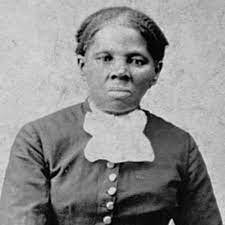
Harriet Tubman
Known as the “Moses of her people,” Harriet Tubman was born in Maryland around 1820 as an enslaved person. After being struck in the head by a 2-pound weight as a teenager, she experienced narcolepsy, epileptic seizures, and severe headaches for the rest of her life. In 1849 Tubman escaped to Philadelphia and made at least thirteen trips back into Maryland’s slave territory to free 60 to 70 enslaved people. She later freed hundreds more in South Carolina as the leader of an armed expedition for the Union Army. Tubman was skilled as a scout, soldier, spy, and nurse, serving as the first Black woman in the U.S. military.

Fannie Lou Hamer
Born in 1917, the youngest of twenty children to sharecroppers in the Mississippi Delta, Fannie Lou Hamer later raised her own family not far away, working in plantation fields and serving as timekeeper to the plantation owner. In 1962, she went with a small group of volunteers from the Student Nonviolent Coordinating Committee (SNCC) to register to vote, but failed an unfair literacy test given by courthouse officials, though she could read and write. When she returned home, the plantation owner was angry because he did not think Black people should have the right to vote. He fired her and made her leave her home of 18 years. SNCC leaders asked Hamer to work as a field organizer, visiting people in her community, teaching them to read, and encouraging them to learn about their voting rights. The next year, Hamer was on her way home from a training program with co-workers when the bus stopped at a lunch counter. The white server refused to serve them, though segregated rest stops were illegal. Police arrested the group, took them to jail for days, and brutally beat them. Hamer was permanently injured afterwards; her sight was weakened, her kidneys suffered damage, and the limp she’d had since childhood polio worsened. Despite these disabilities, she remained determined to push for political change. In 1964, Hamer helped found the Mississippi Freedom Democratic Party, providing representation for the state’s Black people. Hamer gave important speeches and sang at civil rights meetings, inspiring Black people to run for political office. She helped Black people register to vote, protested police brutality, and increased awareness of racial discrimination. She did not let fear stop her from fighting for what she believed in.
What can you do and how can you learn more?
If you have four minutes, watch Smithsonian Channel - Fannie Lou Hamer Risked Her Life for the Right to Vote
If you have five minutes, watch TED-Ed - The Breathtaking Courage of Harriet Tubman, by Janell Hobson.
Dig deeper with these resources:
Disability Visibility Project: blog and podcast by people with disabilities from many professions
Rooted in Rights: blog and storyteller videos intended to amplify the perspectives of the disability community
Check out some books from the Seattle Public Library:
Harriet Tubman: Freedom Fighter by Nadia L. Hohn (Ages 4-8 yrs)
Fannie Lou Hamer: Civil Rights Activist by Duchess Harris (Ages 7-11 yrs)
Social Justice Book list on Disability (all ages)
Seattle Public Library Deaf Awareness Book list (all ages)
SPS 2022 Levy Votes on February Ballot
There are two ballot propositions on the February 2022 ballot that will ask Seattle voters to renew two different levies that support Seattle Public Schools.
There are two ballot propositions on the February 2022 ballot that will ask Seattle voters to renew two different levies that support Seattle Public Schools.
On Thursday, January 13th, join us at 6:30pm on Zoom for a presentation regarding these levies from Assistant Superintendent of Business and Finance, JoLynn Berge, as well as Director of Capital Projects and Planning, Richard Best.
The two levies up for renewal are:
Educational Programs and Operations Levy (EP&O)
From SPS:
If approved, the levy continues funding for day-to-day operations, staffing positions, academic programs and student opportunities that are not fully funded by the state.
School staff: Helps pay for teachers’ salaries and support staff, like school nurses and custodians.
For instance, the state funds nine nurses, but thanks to the levy we employ 68
Supports and programs: Continues funding for special education, advanced learning, child nutrition programs and social-emotional health, as well as programs such as Science, Technology, Engineering and Math (STEM)
For instance, the state funds $82 million for special education, but thanks to the levy we can fund our special education program at $180 million — a $98 million gap.
Opportunities for students, including funding for athletics, arts, drama, and music
For instance, the state provides zero dollars for athletics, but the levy funds $4 million toward athletic opportunities for students.
BTA V Capital Levy
From SPS:
Capital levies are the main source of funding to ensure that every student has a safe, welcoming learning environment. School districts receive limited state or federal funding for improvements to school buildings.
Seattle Public Schools relies on voter-approved capital levies to fund school construction and renovations, safety and security upgrades, building systems improvements, and major maintenance.
Capital levies provide most of the funding for important classroom technology and support for student learning, district technology systems, and technology infrastructure. Report on recent levies.
B stands for Buildings: This portion of the levy includes projects that improve our school buildings. Examples of projects include roof replacements, small renovations, safety improvements and upgrades, heating and ventilation improvements, major maintenance, and critical maintenance.
T stands for Technology: Capital levies provide the primary funding source for making strategic investments in technology for learning and teaching in the classroom; delivering services to students, teachers, staff, and families; and improving efficiency in business processes. Projects and services fall into three major categories: student learning and support, district systems and data, infrastructure, and security
A stands for Academic/Athletics: This portion of the levy pays for modifications needed for academic program changes, playground improvements, athletic field improvements and equipment, and art and science equipment. In addition, SPS owns Memorial Stadium, and the levy includes funding to invest in new grandstands so it can continue to be used for high school athletics, for graduations, and by the community.
Meet Principal Barry Fisk
Dana Robinson Slote, a PTA Board Member and Sac parent, sat down for a quick getting-to-know-you session with Mr. Fisk. Enjoy!
Principal Barry Fisk is replacing Principal Friesen while she’s away, and he started at Sacajawea just a few weeks ago. Although he joined us at our November PTA Board Meeting, we thought that it would be helpful for everyone in our community to hear more about Mr. Fisk from Mr. Fisk himself.
Dana Robinson Slote, a PTA Board Member and Sac parent, sat down for a quick getting-to-know-you session with Mr. Fisk. Enjoy!