
Sacajawea PTA News
The happenings around Sacajawea
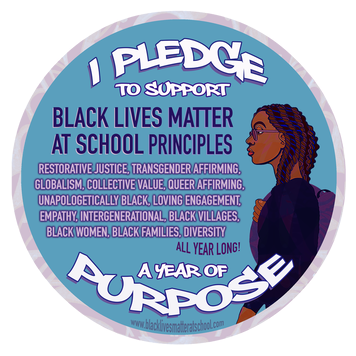
Black Lives Matter at School: 13 Principles
During the first week of February and coinciding with the start of Black History Month, school teams, students and educators throughout Seattle were encouraged to participate in Black Lives Matter at School Week of Action by learning about and discussing the 13 principles of the Black Lives Matter Movement.
Versión en Español
During the first week of February and coinciding with the start of Black History Month, school teams, students and educators throughout Seattle were encouraged to participate in Black Lives Matter at School Week of Action by learning about and discussing the 13 principles of the Black Lives Matter Movement. The goal of Black Lives Matter at School is to spark an ongoing movement of critical reflection, honest conversation and impactful actions in school communities to engage with issues of racial justice.

Explaining The Guiding Principles of Black Lives Matter at School
Black Lives Matter at School is a national committee of educators organizing for racial justice in education. This movement began in Seattle in 2016 when thousands of educators, and hundreds of families and students came to school on October 19th wearing shirts that said, “Black Lives Matter: We Stand Together.” Since then, the movement has grown to include more cities that are participating in affirming the lives of Black educators, students and families.
This year, you may have seen student worksheets relating to lessons that Sacajawea educators taught about the thirteen guiding principles of Black Lives Matter:
Monday: Restorative Justice, Empathy, and Loving Engagement
Tuesday: Diversity and Globalism
Wednesday: Transgender Affirming, Queer Affirming, and Collective Value
Thursday: Intergenerational, Black Families, and Black Villages
Friday: Black Women and Unapologetically Black
These are big ideas that can be challenging to talk about. Bringing 20 years of experience in early childhood education, teacher Laleña Garcia advises using age-appropriate language to talk about the principles and, when possible, to make connections to your child’s lived experience in your home, or out in the world (source: BLM at School):
Restorative Justice is the commitment to building a loving and sustainable community. When you hurt someone, “you can't just say, ‘Sorry,’ and walk away.… We have to help people when something happens to them, even if it was by accident.”
Empathy is one’s ability to connect with others by building mutual trust and understanding. “Think about how other people feel, because different people have different feelings.… Think about how you would feel if the same thing that happened to your friend happened to you.”
Loving Engagement is the commitment to justice, liberation and peace in all our interactions. Being fair and peaceful takes practice so we have to do it a lot to get better at it.
Diversity is the acknowledgment and celebration of differences and commonalities across cultures. There are many different ways that people live in the world, including how they eat, dress, listen to music, and more. It’s important to “have lots of different kinds of people in our community and that everyone feels safe.”
Globalism is our ability to see the Black global family that exists across the world, and how we are affected or privileged within different regions. “Globalism means that we are thinking about all the different people all over the world, and thinking about the ways to keep things fair everywhere.”
Transgender Affirming is the commitment to make space for our trans siblings by encouraging leadership, recognizing trans-antagonistic violence, dismantling cisgender privilege, and uplifting Black trans folk. “People know in their hearts and minds whether they are a boy, a girl, both, or neither. We call this gender identity. Gender identity is who we know ourselves to be.”
Queer Affirming is working towards a world without the belief that everyone is heterosexual unless told otherwise. “Everybody has the right to choose who they love and the kind of family they want by listening to their own heart and mind.”
Collective Value is the understanding that all Black lives matter, regardless of actual or perceived sexual identity, gender identity, gender expression, economic status, ability, disability, religious beliefs or disbeliefs, immigration status or location. “Everybody is important, and has the right to be safe and happy.”
Intergenerational is the belief that all people, regardless of age, have the capacity to lead and learn from each other. “It’s important that we have spaces where people of different ages can come together and learn from each other.”
Black Families is the commitment to family-friendly spaces that let caregivers fully participate in the community with their children. “It’s important to make sure that all families feel welcome.”
Black Villages is the disruption of Western nuclear family dynamics through the support of “villages” that take care of each other. “People who take care of each other… might be related, or maybe they choose to be family together…. Sometimes, when it’s lots of families together, it can be called a village.”
Black Women is the building of women-affirming spaces free from sexism, misogyny, and male-centeredness. “There are some people who think that women are less important than men. We know that all people are important and have the right to be safe and talk about their own feelings.”
Unapologetically Black is the affirmation that Black Lives Matter and that our love, and desire for justice and freedom are prerequisites for wanting the same for others. These principles will not be compromised in an effort to eliminate the discomfort that comes with dealing with race. “There are lots of different kinds of people and one way that we’re different is the color of our skin.…” Even though we’re different we need to treat all people fairly, “and that’s why we, and lots of other people all over the country and the world are part of the Black Lives Matter movement.”
What can you do to learn more?
Talk to your child about the principles they learned and what resonated with them.
If you have two minutes, read ArtSEA: Black history lights up Seattle’s Central District.
Dig deeper with these resources and books:
The 1619 Project: Born on the Water, by Nikole Hannah-Jones and Renée Watson. Find it at the Seattle Public Library.
Teaching for Black Lives, edited by Dyan Watson, Jesse Hagopian, Wayne Au. Find it at the Seattle Public Library.
Listen to The Land That Never Has Been Yet, a 12-part audio podcast where the hosts re-examine dominant narratives told in American history.
Black Lives Matter at School Year of Purpose: Student Activism
We're showcasing student activism to underscore the long-reaching effects of racial equity activism.
Versión en Español
We're showcasing student activism to underscore the long-reaching effects of racial equity activism. Whatever form of advocacy people engage in, working toward social justice results in positive impacts for individuals and their neighborhoods. Activism helps build connections among people and to their communities. It empowers people to create vibrant, thriving places to live.

Black Lives Matter Student Activist Awards
Schools also are integral to communities and forging healthy connections among students, families and organizations is crucial for healthy neighborhoods. When people feel connected to their community, they tend to be happier and more resilient. This is why Jesse Hagopian, a Garfield High School teacher and a founder of Black Education Matters Student Activist Award (BEMSSA), introduced the 2021 awardees by underscoring a common theme in the students’ activism:
“You knew and recognized and understood that school could not be dislocated from community, and so you really brought community into the school, and you brought the school into the community.”
The BEMSSA awards include a $1,000 stipend and are given to students who demonstrate “exceptional leadership in struggles for social, and against racism—especially with an understanding f the intersections with sexism, homophobia, transphobia, Islamaphobia, ableism, class exploitation and other forms of oppression—within their school or community.”
And now, a brief introduction to each of last year’s recipients:
KyRi Miller – Garfield High School, Class of 2021
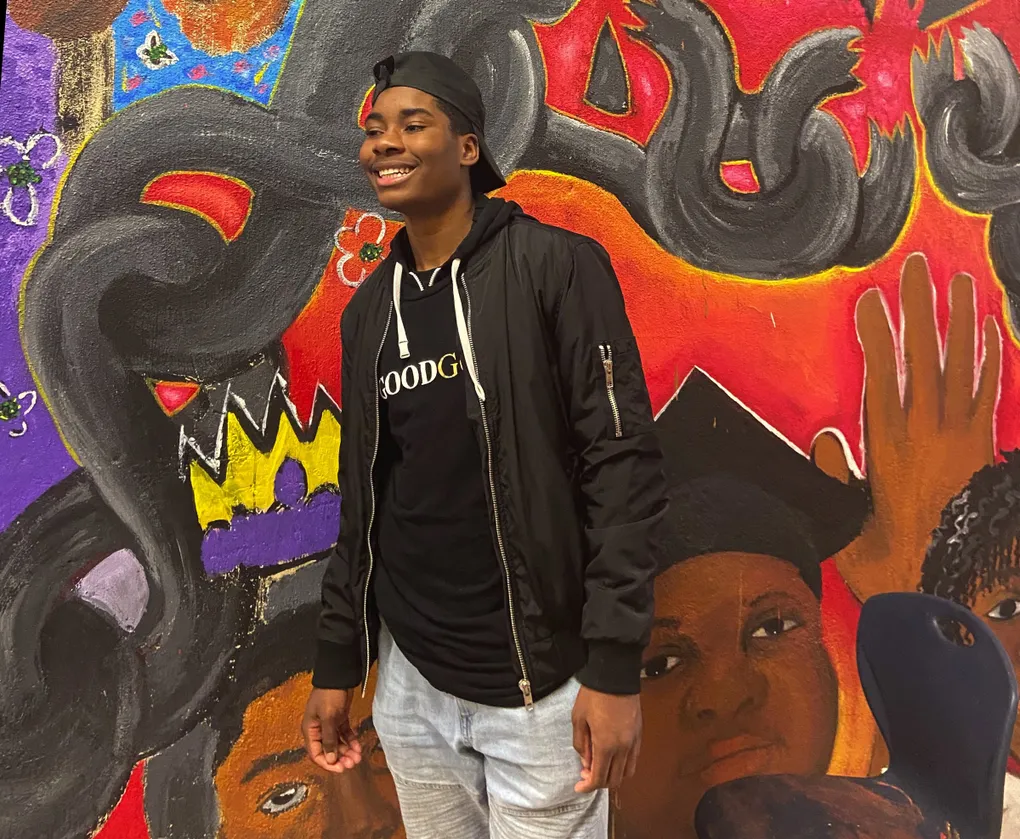
(Photo by LaCretiah Claytor)
KyRi Miller earned his award based on his organization and leadership of a Black Lives Matter at School assembly and mural on the walls of Garfield’s second-floor balcony. The mural illustrates Black history, the achievements as well as the injustices. For him, activism stems from being Black. His goal is to live his excellence and to defy Black stereotypes, particularly in an acting and directing career.
This fall, KyRi Miller started college at the historically Black Dillard University in New Orleans. You can find out more about this student activist by clicking the links below.
Aneesa Roidad – Ballard High School, Class of 2020
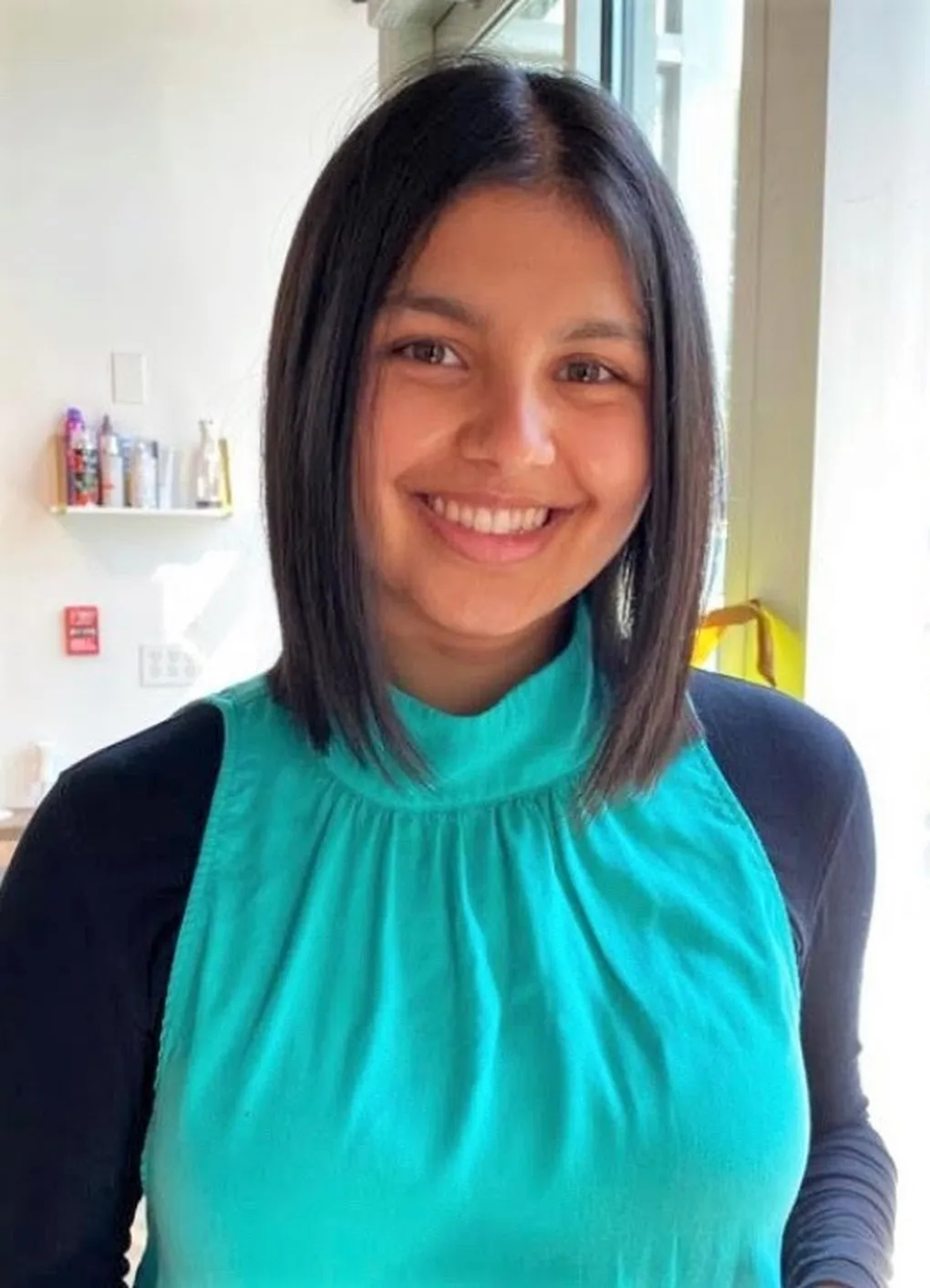
(Photo by Lena Roidad)
Roidad moved to Seattle from Pennsylvania in her sophomore year. Her heritage as a Pakistani American sparked her interest in showing solidarity with people who do not have equal access to opportunities. She was particularly interested in changing the curriculum and culture in her school. Her leadership role in forming the Washington NAACP Youth Council reflects the determination to foment educational justice.
After a gap year to continue working with NAACP Youth Council, Aneesa Roidad began at Harvard University this fall. Read more about her activism by clicking the links below.
Mia Dabney – Cleveland STEM High School Student

(Photo by Mia Dabney)
Mia Dabney helped create Seattle Public Schools Board Policy 1250 that passed in spring 2021 and mandates that three, five or seven students will sit on the school board each year. The goal is to better represent the diversity of the district. Her activism stems from her experience being a young Black woman in Seattle and the world. Her parents imbued the core values of education and love that Dabney uses to embrace her inner strength, even when she is afraid people won’t listen or necessarily understand what she is trying to accomplish.
Mia Dabney started her senior year at Cleveland High School this year. She plans to pursue a career in medicine. Find out more about her activism by clicking on the links below.
Invitation
Please share your family’s and/or child’s experience with activism. Are you engaged with a local organization or want to share resources? We’ll gather responses and share them with our school community. Please indicate if it’s okay to follow up with you if we have any questions.
equity@sacpta.org
More about the student activists highlighted in this newsletter (9.6 minutes): KyRi Miller, Aneesa Roidad, & Mia Dabney Win 6th Annual BEMSAA Awards | South Seattle Emerald
More about the Miller, Roidad and Dabny (7.5 minutes): Exceptional leaders for social change: Black educators group honors Seattle student activists | The Seattle Times
Dig deeper with these resources:
NEA BLM at School Resources
Black Education Matters outlines how and why the student activist awards were created. And includes list of winners from past years.
Heritage Potluck Community Cookbook - LAST CALL
View the first draft of the Heritage Potluck Community Cookbook. Find your recipe or have a chance to add your recipe. Hurry before its too late!
Thank you to all the families that have contributed to the cookbook.
Here’s a sneak peek of the Heritage Potluck Community Cookbook.
There is still time to add your family’s recipe to the cookbook! Sacajawea Equity Team is accepting recipes until 2/17. Please give them to the school office or your students teacher.
If after viewing the sneak preview you would like to have your child’s (or your family’s) name on the recipe, please let Lori Phipps (lphipps01@gmail.com) know which recipe is yours and what name you would like displayed. We would really like to know where some of these fantastic recipes are coming from.
There are some yummy recipes try!
BLM at School: International People's With Disabilities Day
We highlight International People’s With Disabilities Day by shining the spotlight on two famous figures who are not generally recognized as part of the disability community: Harriet Tubman and Fannie Lou Hamer.
We’re highlighting International People's with Disabilities Day by shining the spotlight on two famous figures who are not generally recognized as part of the disability community: Harriet Tubman and Fannie Lou Hamer. Why leave out this part of their identity in our shared stories of them? It's important to see a person’s full life, celebrate their differences, and learn from their challenges and accomplishments.

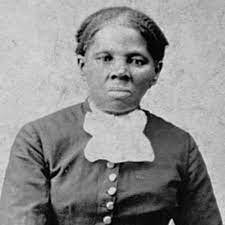
Harriet Tubman
Known as the “Moses of her people,” Harriet Tubman was born in Maryland around 1820 as an enslaved person. After being struck in the head by a 2-pound weight as a teenager, she experienced narcolepsy, epileptic seizures, and severe headaches for the rest of her life. In 1849 Tubman escaped to Philadelphia and made at least thirteen trips back into Maryland’s slave territory to free 60 to 70 enslaved people. She later freed hundreds more in South Carolina as the leader of an armed expedition for the Union Army. Tubman was skilled as a scout, soldier, spy, and nurse, serving as the first Black woman in the U.S. military.

Fannie Lou Hamer
Born in 1917, the youngest of twenty children to sharecroppers in the Mississippi Delta, Fannie Lou Hamer later raised her own family not far away, working in plantation fields and serving as timekeeper to the plantation owner. In 1962, she went with a small group of volunteers from the Student Nonviolent Coordinating Committee (SNCC) to register to vote, but failed an unfair literacy test given by courthouse officials, though she could read and write. When she returned home, the plantation owner was angry because he did not think Black people should have the right to vote. He fired her and made her leave her home of 18 years. SNCC leaders asked Hamer to work as a field organizer, visiting people in her community, teaching them to read, and encouraging them to learn about their voting rights. The next year, Hamer was on her way home from a training program with co-workers when the bus stopped at a lunch counter. The white server refused to serve them, though segregated rest stops were illegal. Police arrested the group, took them to jail for days, and brutally beat them. Hamer was permanently injured afterwards; her sight was weakened, her kidneys suffered damage, and the limp she’d had since childhood polio worsened. Despite these disabilities, she remained determined to push for political change. In 1964, Hamer helped found the Mississippi Freedom Democratic Party, providing representation for the state’s Black people. Hamer gave important speeches and sang at civil rights meetings, inspiring Black people to run for political office. She helped Black people register to vote, protested police brutality, and increased awareness of racial discrimination. She did not let fear stop her from fighting for what she believed in.
What can you do and how can you learn more?
If you have four minutes, watch Smithsonian Channel - Fannie Lou Hamer Risked Her Life for the Right to Vote
If you have five minutes, watch TED-Ed - The Breathtaking Courage of Harriet Tubman, by Janell Hobson.
Dig deeper with these resources:
Disability Visibility Project: blog and podcast by people with disabilities from many professions
Rooted in Rights: blog and storyteller videos intended to amplify the perspectives of the disability community
Check out some books from the Seattle Public Library:
Harriet Tubman: Freedom Fighter by Nadia L. Hohn (Ages 4-8 yrs)
Fannie Lou Hamer: Civil Rights Activist by Duchess Harris (Ages 7-11 yrs)
Social Justice Book list on Disability (all ages)
Seattle Public Library Deaf Awareness Book list (all ages)
SPS 2022 Levy Votes on February Ballot
There are two ballot propositions on the February 2022 ballot that will ask Seattle voters to renew two different levies that support Seattle Public Schools.
There are two ballot propositions on the February 2022 ballot that will ask Seattle voters to renew two different levies that support Seattle Public Schools.
On Thursday, January 13th, join us at 6:30pm on Zoom for a presentation regarding these levies from Assistant Superintendent of Business and Finance, JoLynn Berge, as well as Director of Capital Projects and Planning, Richard Best.
The two levies up for renewal are:
Educational Programs and Operations Levy (EP&O)
From SPS:
If approved, the levy continues funding for day-to-day operations, staffing positions, academic programs and student opportunities that are not fully funded by the state.
School staff: Helps pay for teachers’ salaries and support staff, like school nurses and custodians.
For instance, the state funds nine nurses, but thanks to the levy we employ 68
Supports and programs: Continues funding for special education, advanced learning, child nutrition programs and social-emotional health, as well as programs such as Science, Technology, Engineering and Math (STEM)
For instance, the state funds $82 million for special education, but thanks to the levy we can fund our special education program at $180 million — a $98 million gap.
Opportunities for students, including funding for athletics, arts, drama, and music
For instance, the state provides zero dollars for athletics, but the levy funds $4 million toward athletic opportunities for students.
BTA V Capital Levy
From SPS:
Capital levies are the main source of funding to ensure that every student has a safe, welcoming learning environment. School districts receive limited state or federal funding for improvements to school buildings.
Seattle Public Schools relies on voter-approved capital levies to fund school construction and renovations, safety and security upgrades, building systems improvements, and major maintenance.
Capital levies provide most of the funding for important classroom technology and support for student learning, district technology systems, and technology infrastructure. Report on recent levies.
B stands for Buildings: This portion of the levy includes projects that improve our school buildings. Examples of projects include roof replacements, small renovations, safety improvements and upgrades, heating and ventilation improvements, major maintenance, and critical maintenance.
T stands for Technology: Capital levies provide the primary funding source for making strategic investments in technology for learning and teaching in the classroom; delivering services to students, teachers, staff, and families; and improving efficiency in business processes. Projects and services fall into three major categories: student learning and support, district systems and data, infrastructure, and security
A stands for Academic/Athletics: This portion of the levy pays for modifications needed for academic program changes, playground improvements, athletic field improvements and equipment, and art and science equipment. In addition, SPS owns Memorial Stadium, and the levy includes funding to invest in new grandstands so it can continue to be used for high school athletics, for graduations, and by the community.