Sacajawea PTA News
The happenings around Sacajawea
Heritage Potluck - Community Cookbook (Deadline 12/16th)
Heritage Potluck Reimagined. Share with the school community your favorite recipe.
Each year the Parent Equity team organizes the Heritage Potluck. This event would usually have been a time when we gathered after school bringing a favorite family recipe to share. We would chat and get to know each other a little better and experience each other's lovely recipes. Gathering is still not allowed so we thought we would try a little something different.
The Parent Equity team would like to put together a community cookbook of your favorite recipes. Your student received a Recipe Sheet before Thanksgiving break. The Recipe Sheet isn't only for a recipe, it could be a shared memory, and a drawing related to a recipe or making of a recipe. The sheet tries to give kids of all ages a way to share a little of themselves and their families with the whole school community. We encourage family participation! If we get enough participation we will then create the cookbook and share it with anyone in the school community that would like one.
If you need a new Recipe Sheet or would like to submit more than one you can download one here:
Once you have completed your Recipe Sheet(s) please give them to your teacher or email them to Lori Phipps at lphipps01@gmail.com. Deadline for submitting a Recipe Sheet is December 16th.
We look forward getting to know you one recipe at a time.
BLM at School Year of Purpose: Day of Action
Sacajawea’s Parent Racial Equity Team is sharing resources with you and your family to take action to support the work of educators to #TeachTruth.
Sacajawea’s Parent Racial Equity Team wants to share resources with you and your family to take action to support the work of educators to #TeachTruth. With the passage of laws in 11 states that require teachers to lie to students about the reality and history of racism in this country, and its ongoing structural inequities, the call to action is urgent. #TeachTruth Day of Action took place on George Floyd’s birthday, Thursday, October 14.
Use the following self-reflection questions from BLM at School to help inspire action:
Is our school a place that believes in the mission of Black community organizing? Do we serve as a place to connect with local families?
How are school-wide policies and practices, especially disciplinary practices, applied across racial categories?
Do problematic patterns emerge when we look at how policies are applied to Black students, and when we consider the intersection of gender, sexual orientation, and (dis)ability with race?
Do our practices erase the histories of our students and prevent them from bringing their whole selves into the learning environment?
How do local or state laws and policies, regulations, and practices harm Black students and families?
What can you do and how can you learn more?
Tell the Seattle School Board why you want your children to be taught authentic U.S. history in school. Learn more about how to give public testimony at School Board and City Council meetings.
Create a poem, drawing or video to share what learning authentic history means to you.
Plan a virtual field trip with your family:
If you have eight minutes, listen to or read Talking to Children About Racial Bias
If you have ten minutes, read What Is Critical Race Theory, and Why is It Under Attack
Dig deeper with these resources and books:
Explore Historical Foundations of Race from the National Museum of African American History of Culture
Listen to Racism -- And Anti-Racism -- In Vermont (48:54 minutes)
BLM at School: Transgender Day of Remembrance
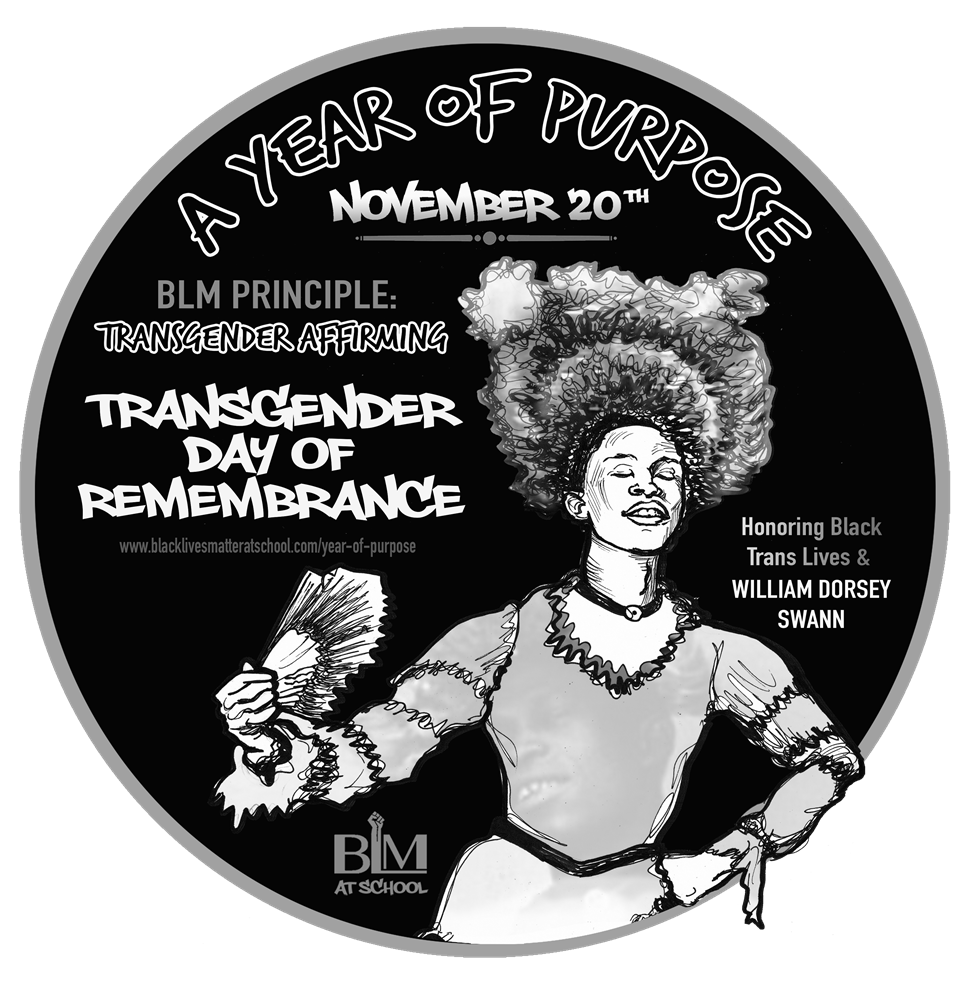
This month we highlighted Transgender Day of Remembrance on November 20 by looking at the life of William Dorsey Swann.
This month we highlighted Transgender Day of Remembrance on November 20. Versión en Español
Loan T., Student Media Ambassador for the Gay, Lesbian and Straight Education Network (GLSEN),* articulates beautifully why this day is so important:
“Transgender Day of Remembrance is really all about remembering to never forget the history and presence of trans* people in our world. And with that, Transgender Day of Remembrance (TDOR) stands as an even larger motivator to embrace the identities we ourselves have and the identities of others. It’s a day for action, for mobilization, for story telling, and for revitalization. But most importantly, TDOR is an opportunity to celebrate the diverse lives of trans* people everywhere. It’s crucial to recognize that trans* people have made great, beautiful strides to transform and challenge society… and what’s even more awesome and admirable is that we keep doing so every single day. We continue to come out, to speak out, to shout out loud that we have hurt and we have lost but that will never prevent us from shouting even louder that we are here and we will continue to exist in the most influential ways—that’s what matters most to me: having a community that I can stand with no matter what.” - GLSEN Student Media Ambassador Loan T.
*GLSEN champions LGBTQ issues in K-12 education. Founded in 1990, this national network of educators, students and local GLSEN Chapters work to ensure every student has a safe, supportive and LGBTQ-inclusive K-12 education. They work to ensure that LGBT students are able to learn and grow in a school environment free from bullying and harassment. Find out more about GLSEN here.

William Dorsey Swann
One relatively unknown person who challenged gender norms of the day was William Dorsey Swann. Born in Maryland in 1860, Swann endured slavery, the Civil War, racism, police surveillance, torture behind bars, and many other injustices. Beginning in the 1880s, he not only became the first American activist to lead a queer resistance group; he also became, the first known person to dub himself a “queen of drag.” It was revolutionaries like him that fought injustice paving the way for generations to follow.

Two Spirit
November is also Native American Heritage Month, and we would like to call attention to the historical and contemporary experience of non-binary and fluid gender identity of Native American people among various tribes across the continent. Though the term Two Spirit itself was adopted in Winnipeg, Canada in 1990 as a positive umbrella term for these identities in different tribes, the historical concept of non-binary and gender fluidity had different names and expressions among unique tribal nations. It traditionally referred to individuals with both feminine and masculine traits, and could be considered a third gender (some tribes recognized more than three genders). These individuals often held unique spiritual and/or societal roles and were respected, if not revered, in the tribe. The term Two Spirit is not necessarily synonymous with Western LGBTQ concepts, though there may be intersections between gender and sexual identity among these identities and terms.
What can you do and how can you learn more?
Talk to your students about the info presented above.
If you have three minutes, read one of the following articles (or all of them!):
Be an Ally - Support Trans Equality
IHS Two Spirit
Eight Things You Should Know About Two Spirit People
If you have five minutes, watch BBC Reel - William Dorsey Swann
If you have six minutes, watch What Does "Two Spirit" Mean?
If you have eleven minutes, listen to the podcast Two Spirit - Changing Our Stories
Dig deeper with these resources and books:
Dig deeper with these resources and books:
THE BASICS: BREAKING THE BINARY, EXPANDING GENDER EXPRESSIVENES
Gender Triangle Education Guide / Trevor Project
Beyond the Binary: A Tool Kit for Gender Identity Activism in Schools
GO DEEPER: Trans Agenda for Liberation via Transgender Law Center
WATCH THE POWERFUL INTRODUCTION
Check out some books from the Seattle Public Library
Social Justice Book lists:
Early Childhood: Learning about Gender Identity Booklist
LGBTQ+ Booklist (all ages!)
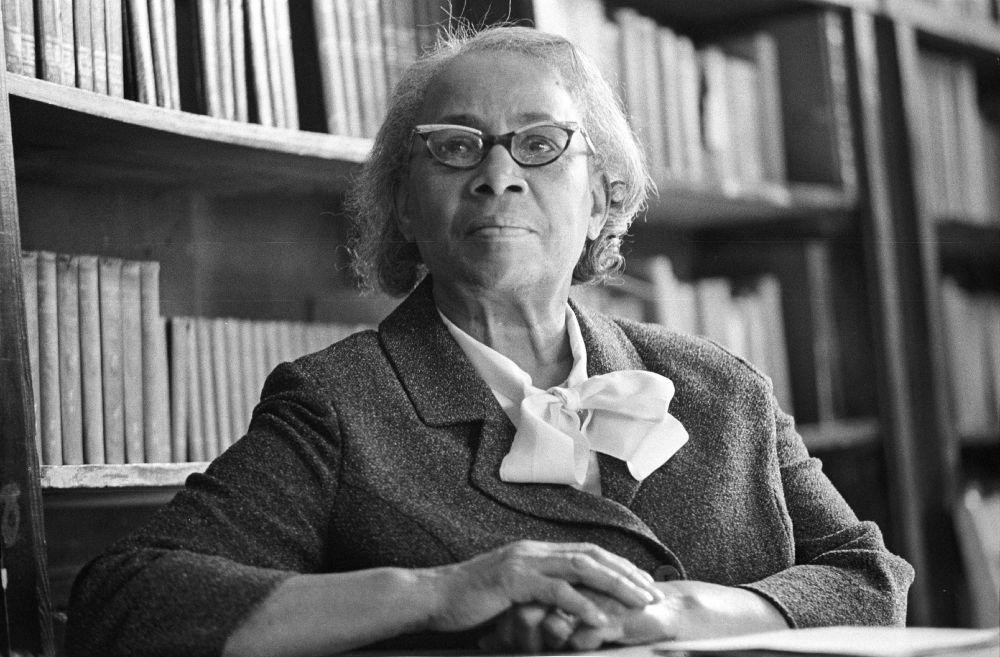
May BLM Year of Purpose; Septima Clark; Black Radical Educator Day & Black Villages
This month, Sacajawea’s Parent Racial Equity Team celebrates Septima Clark’s Birthday and Black Radical Educator Day (May 3), plus the guiding principle of Black Villages. Our goal is to empower parents and students to do the necessary work to achieve racial equity and justice.
Click Here for Spanish Version
Dear Sacajawea Community,
This month, Sacajawea’s Parent Racial Equity Team celebrates Septima Clark’s Birthday/Black Radical Educator Day (May 3). Septima Clark was an educator and civil rights activist whose work in the 1950s and beyond were crucial in the drive for voting rights and civil rights for African Americans.
This month’s guiding principle focuses on Black Villages; “Supporting, promoting, and fostering growth and renewal for our villages” and highlight three “villages” within the United States; Wa Na Wara (Seattle), Ethel’s Club (New York City/online), and Black Scientists Matter (nationwide) with the intent to encourage our community’s continued engagement with Black Lives Matter at School Year of Purpose. Our goal is to empower parents and students to do the necessary work to achieve racial equity and justice.
Septima Poinsette Clark (1898 - 1987)
“I believe unconditionally in the ability of people to respond when they are told the truth. We need to be taught to study rather than believe, to inquire rather than to affirm.”

Born to a laundry woman and former slave, Septima Poinsette Clark led an incredible life of drive and innovation in grassroots citizenship education, and was considered the “Mother of the Movement”. She overcame multiple obstacles to becoming a teacher, including pursuing her education during summer breaks. When she finally became a teacher, she faced opposition in the city of Charleston refusing to hire black educators. Turning her frustration into action, Septima worked with NAACP (National Association for the Advancement of Colored People) to petition the city to change their policies..
A lifelong advocate for equality and education, she and Thurgood Marshall campaigned for equal pay for black teachers at Columbia. She worked with the YWCA in a class action lawsuit filed by the NAACP that resulted in pay equity for black and white teachers in South Carolina.
Later, South Carolina state legister banned state employees from being associated with civil rights organizations (such as NAACP) in order to minimize their effectiveness. Septima refused to withdraw from the NAACP, and moved to Tennessee where she helped found citizenship schools designed to “aide literacy and foster a sense of political empowerment within the black community.” Rosa Parks participated in one of Septimas workshops just months prior to leading the Montgomery Bus Boycott.
The citizenship training program equipped African Americans with basic literacy and math in order to pass the prerequisite test to register to vote. This in turn linked individuals and communities to the power of the vote.
When she retired at the age of seventy two, Septima had educated some ten thousand citizenship school teachers and her colleagues had educated one hundred thousand Blacks to read and write and demand their rights of citizenship. Nearly two hundred schools were operating in the South in 1962, forever changing the political face of the region.
Septima observed best the success of her workin 1982; “From one end of the South to the other, if you look at the black elected officials and the political leaders, you find people who had their first involvement in the training program of the citizenship school.” Her legacy continues to live on.
Black Villages
This BLM Year of Purpose principle is “committed to disrupting the Western-prescribed nuclear family structure requirement by supporting each other as extended families and “villages” that collectively care for one another. For younger learners, this principle shares the understanding message that there are lots of different kinds of families; those people might be related, or maybe they choose to be family together and to take care of each other, what makes a family is that it’s people take care of each other.”
Here are just a few examples of such villages and the impact they are making in their communities and beyond;
Wa Na Wari

“Sited in a fifth-generation, Black-owned home, Wa Na Wari is an immersive community art project that reclaims Black cultural space and makes a statement about the importance of Black land ownership in gentrified communities. Our mission is to create space for Black ownership, possibility, and belonging through art, historic preservation, and connection. Referred to as a "container for Black joy,” Wa Na Wari incubates and amplifies Black art and belonging while providing a safe space for organizing and movement building. By renting a house from a vulnerable Black homeowner, and giving that space back to the Black community, Wa Na Wari is an active model for how Black art and culture can combat gentrification and displacement.”
Ethel's Club - New York City/Online

.
Ethel's Club is the first social and wellness platform designed to celebrate people of color in both physical and digital spaces. Our vision is to spark the next renaissance with people of color at the forefront.
At Ethel's Club, we see our members as unique individuals that deserve care, celebration, and healing. We believe that when we’re given the tools to thrive as individuals, we create new worlds when we come together as a community. We’re dedicated to providing those tools to encourage healing, inspiration, and communal care.”
Black Scientists Matter

“Black people comprise 13% of the United States population, but less than 5% of graduate students pursuing Ph.D’s in STEM and 8% of the STEM workforce (National Science Foundation, 2019) The question is, why are there so few Black scientists? And what can we do to fix that?
This organization is an apparel brand that utilizes the power of social media to promote scientific literacy and STEM education to people of all backgrounds. Currently, the brand maintains multiple social media platforms with a growing follower base and has sold merchandise to 35 different states in the U.S. Black Scientists Matter has also been featured in numerous blogs, podcasts, and publications, and in 2018 was awarded a grant from Johns Hopkins University to further it’s mission of empowering the African American community through science!
BSM features an active Blog that allows science enthusiasts a platform to learn more about scientific concepts, discuss their unique academic journey’s, and provide resources to assist future scientists. As the brand continues to evolve to address diversity, equity, and inclusion in science, Black Scientists Matter Inc. will continue to grow and expand.”
We encourage you to learn more about Septima Clark, radical black educators (see below resources) and the Black villages discussed in this newsletter. There are many examples of individuals and communities embracing the power of community and the impact both within Black communities and beyond.
What ignites your passion and what steps can you take to initiate action?
Take a virtual tour of the Northwest African American Museum to learn about Seattle Black Villages over the years. Support local nonprofits such as Black Heritage Society, GirlTrek, Langston Hughes Performing Arts Center and Jack and Jill Tacoma/Seattle. Investigate if there are communities in your own neighborhood that you can support.
What can you do and how can you learn more?
If you have 2 minutes, watch Black Educators: A History of Shaping the Future six radical black educators are highlighted in these videos, all about 2 minutes long
If you have 3 minutes, read 12 Black Educators Who Changed History That We Should All Know About
If you have 4 minutes, read How Black Classical Musicians Are Creating Community
If you have 6 minutes, watch TED Talk Black Male Educators Matter Vincent Cobb
Check out these books focused on Black educators and Black families and villages:
Full, Full, Full of Love by Trish Cook (Ages 2-5 years)
Last Stop on Market Street by Matt de la Pena (Ages 3-5 yrs)
Uncle Jed’s Barbershop by Margaret King Mitchell (Ages 4-7 yrs)
The Secret River by Marjorie Kinnan Rawlings (Ages 4-8 yrs)
One Family by George Shannon (Ages 4-8 yrs)
Grandpa’s Face by Floyd Cooper (Ages 4-8 yrs)
Ellington Was Not a Street by Ntozake Shange (Ages 5-11 yrs)
The Teachers March!: How Selma's Teachers Changed History By Sandra Neil Wallace (Ages 7-10 yrs)
Midnight Teacher: Lilly Ann Granderson and Her Secret School by Janet Halfmann (Ages 7-11 yrs)
In Daddy’s Arms, I am Tall by Folami Abiade (Ages 8-11 yrs)
With gratitude,
Sacajawea’s Parent Racial Equity Team
Jennifer Sunami, Becky Beard, Dana Robinson Slote, Robin King, John Delfeld, Karla Sclater, Sophie-Shifra Gold, Lori Phipps, Jenna Buzzard, Ara Swanson
Stand in Solidarity AAPI Community Members
Asians, Asian Americans, and Pacific Islanders have a long history in the United States, and are an integral part of our diverse cultural history.
Asians, Asian Americans, and Pacific Islanders have a long history in the United States, and are an integral part of our diverse cultural history. Unfortunately, anti-Asian American and anti-Pacific Islander sentiment also has a long history that reverberates to this day. We are witnessing an expression of this painful legacy as fear and misinformation generated from the coronavirus pandemic has led to an increase in threats or acts of violence against the AAPI community. According to a recent study of police departments by the Center for the Study of Hate and Extremism at California State University, San Bernadino, anti-Asian hate crimes in major American cities escalated by 150 percent in 2020 (CBS News).
The Sacajawea Parent Equity Team stands with our Asian, Asian American, and Pacific Islander community members and neighbors. More than this, we want to offer accessible ways to take action to stand in solidarity and provide information to learn more. In that spirit, we present the following links:
Take Action by Gathering Information
If you have 2 minutes, Kim Sauer, President of The Washington Immigration Network offers a brief statement and ways to support our AAPI community: Response to Hate Crimes Against the AAPI Community, March 24, 2021.
If you have 3 minutes, Karen Maeda Allman’s list of readings on Asian American experiences. Allman, of Elliot Bay Book Company, offers books on local history as well as broader American history: “15 books to read to learn more about Asian American history and experiences, in Seattle and elsewhere,” by Naomi Ishisaka, Seattle Times Columnist.
If you have 7 minutes, read “A Seattle doctor reflects on Atlanta and anti-Asian racism,” by Amy Zhang.
Deep-dive: A History Bursting With Telling: Asian Americans in Washington State, A curriculum project for Washington schools, developed by Mathhew W. Klingle, Center for the Study of the Pacific Northwest, University of Washington Department of History.
Take Direct Action with Your Voice and Your Support of Local Businesses and Nonprofits
Take action to help STOP AAPI HATE. Click on the “Act Now” button. This site offers information and several easily accessible resources in multiple languages, including safety tips, how to report crimes, and donate to local efforts.
Greater Seattle Chinese Chamber of Commerce - The Greater Seattle Chinese Chamber of Commerce
https://capaa.wa.gov/asian-pacific-american-directory/