
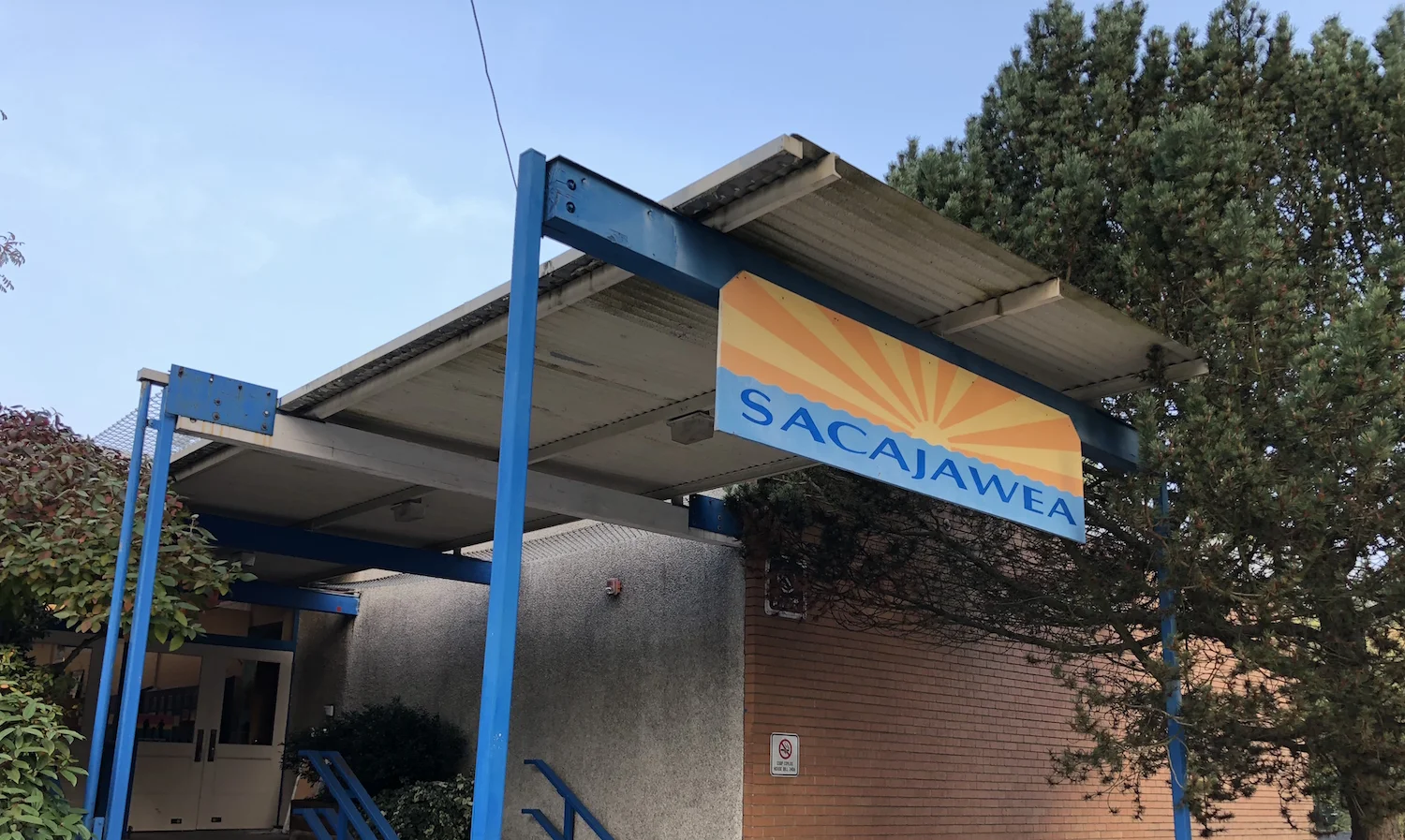
Sacajawea PTA News
The happenings around Sacajawea
Join Sacajawea at the MLK Day March and Rally, January 20, 2025
On January 20th, 2025, Sacajawea families will come together to honor the life and legacy of Dr. Martin Luther King Jr. by participating in the annual MLK Day March and Rally at Garfield High School.
Mark your calendars! On January 20th, 2025, Sacajawea families will come together to honor the life and legacy of Dr. Martin Luther King Jr. by participating in the annual MLK Day March and Rally at Garfield High School. Organized by the Seattle MLK Jr. Organizing Coalition, this event provides a meaningful and family-friendly opportunity to engage in social justice action.
Whether you’re a seasoned activist or new to marches, this day is designed to inspire, educate, and unite us all. Here’s everything you need to know to join the Sacajawea community in this important day of remembrance and action.
What’s Happening?
We’ll meet at noon on the Garfield Community Center playground (located on Cherry Street). From there, we’ll join the march and rally, which includes pre- and post-march events like workshops, an opportunity fair, and inspiring rallies.
New for 2025!
We’re thrilled to announce that Sacajawea families have the option to march alongside Dance 4 Democracy, a vibrant group that brings joy and energy to marches with their soul-inspired protest line dances. People of all ages and abilities are welcome to join the fun, whether dancing or marching alongside.
Want to practice the moves ahead of time? Watch the videos below for access to three of the songs Dance 4 Democracy will perform during the march. Participation in the dancing is entirely optional, so feel free to simply march in solidarity if that’s more your style!
What Should You Bring?
To ensure a comfortable and enjoyable experience, we recommend:
Dressing for the weather: Bring layers, waterproof gear, and extra warm clothing.
Snacks: Pack plenty of snacks, especially if you’re bringing little ones.
Transportation: Don’t forget your ORCA cards or cash for public transit.
Signs and noise-makers: Bring signs, musical instruments, or drums to amplify the spirit of the day.
Sacajawea/BLM t-shirts: Show your school pride and support for racial equity.
What Will We Provide?
The Sacajawea Parent Racial Equity Team will have:
A photographer for a group photo before the march starts.
Markers to write parent phone numbers on kids’ arms, just in case.
Extra snacks and drinks to share.
For questions or day-of updates, contact Robin King at (208) 989-5081.
Prepare Your Family
Help your children understand the importance of this day with age-appropriate resources:
Books for Young Readers:
YouTube Read-Alouds and Clips:
Make a Sign
Kids love creating their own signs, and it’s a great way to connect them with the purpose of the march. Choose simple, child-friendly slogans like:
“Love, Peace, and Justice!”
“I Have a Dream Too!”
“Equal Rights for All!”
For inspiration, visit Amplifier or the MLK March website for downloadable designs.
Join Us!
This day is about more than just marching; it’s about celebrating community, educating our children, and standing up for justice. Let’s make this MLK Day one to remember!
For more event details, visit the Seattle MLK Jr. Coalition website.
We look forward to seeing you there!
Summary of SPS Engagement Efforts at Sacajawea, Nov 2024
Our Sacajawea community has had several touch points with SPS officials and school board members in the past week. This is an overview of everything that’s going on.
Our Sacajawea community has had several touchpoints with SPS officials and school board members in the past week.
On Thursday, Nov. 7th, SPS held an engagement session at Sacajawea.
After Thursday’s meeting, SPS asked our community to provide feedback and questions via their ThoughtExchange survey.
On Friday, School Board President Liza Rankin and School Board member Gina Topp visited Sacajawea. They toured the school with Principal Fisk, teacher Kara Golgert, and Sacajawea parent and BLT representative Julie Letchner.
Over the last two weeks, Faauu Manu, Director of Enrollment Planning for SPS, held several small group Q&A sessions at Sacajawea during the school day.
The remainder of this post summarizes these touchpoints and provides links to more relevant information.
SPS Engagement Session: Nov. 7th, 2024
On Thursday, November 7th, Seattle Public Schools held a community engagement session at Sacajawea to present their case for closures. Superintendent Dr. Brent Jones, joined by key district leaders, presented a preliminary recommendation to close Sacajawea Elementary and consolidate it with John Rogers. The district cited factors such as Sacajawea's aging facilities, low enrollment, and resource allocation challenges as driving forces behind the proposed closure.
Although the presentation emphasized the potential benefits of consolidation, including a more modern learning environment and increased resources, many in attendance felt the district's messaging lacked transparency and did not address the community's specific concerns.
After the presentation, a Q&A session allowed community members to voice concerns about topics such as special education services, community cohesion, and financial transparency. During this session, many of the responses from district representatives came off as vague or incomplete, leading many in our community to be skeptical of their intentions. After the meeting, some district staff and School Board President Liza Rankin stayed after to continue informal discussions with parents.
As SPS moves forward, a 30-day review period is open for community input, with a follow-up meeting and final decisions on the closure anticipated in early 2025.
To learn more about the meeting, including Q&A details, read our complete write-up of the meeting.
ThoughtExchange Feedback Survey
After the community meeting, SPS officials asked our community to provide feedback via a ThoughtExchange survey. This tool allowed our parents to offer unlimited short questions or thoughts (300 characters or less).
Our PTA team pulled the data from this survey–which was available after completing the survey–and found six main themes in the data.
Transparency and Trust in Decision-Making and Budget/Cost Estimates
Concerns Over Resource Allocation and Staffing at the Merged School
Equity and Support for High-Needs Populations (SPED, ELL)
Concerns Over Transportation and Safety
Concerns About Student Well-being and Social-Emotional Stability
Impact on Community and Neighborhood Cohesion
To read feedback from our community for these main themes, read our complete write-up of the ThoughtExchange survey.
Sacajawea Tour with School Board Members: Nov. 8th, 2024
From PTA Building Leadership Team rep, Julie Letchner:
“School board directors Gina Topp and Liza Rankin—the board president and the member who holds the board seat elected by Sac’s geo-zone—visited Sac on Friday for an hour-long tour. Principal Fisk and preschool teacher Kara Golgert co-led the tour. I was the only additional guest, representing the PTA. We visited the Pre-K portables; four homerooms, including Isaiah Swanson’s distinct classroom; and Mr. Ryan’s art room.
Along the way, Kara highlighted the facilities needs of the students in our pathways programs. Notably, many of these facilities requirements are met by the planned Sac redesign, but not by the new John Rogers building. Barry spoke with both directors in walking one-on-ones. I sprinkled in community perspectives throughout, emphasizing the frustrations of Thursday evening’s meeting, particularly regarding well-resourced staffing and the district’s silence about choosing closure vs. rebuilding.”
Small Group Sessions at Sacajawea with Faauu Manu
Faauu Manu, Director of Enrollment Planning for SPS, held several small group Q&A sessions at Sacajawea during the school day. These meetings occurred at Sacajawea during the weeks of Oct. 28th and Nov. 4th with very little notice given before each meeting (typically one day or less). We created this write-up using the notes provided by various parents who attended one or more sessions with Faauu.
During these sessions, parents raised concerns about the transition's impacts on students and families, with a focus on areas such as special education services, after-school care, transportation, staffing, and community diversity. While Faauu provided some responses, numerous questions remain open, contributing to parental concerns about communication and transparency from the district.
To learn more about these meetings, read our full write-up of the Faauu Manu meetings.
Summary of SPS + Sacajawea Community Meeting on Nov. 7th, 2024
Members of Seattle Public Schools held a community meeting at Sacajawea on Nov. 7th. Several members of our community took notes, and this is our overview of the meeting.
The Sacajawea community meeting with SPS officials on November 7th opened with a brief introduction by Superintendent Dr. Brent Jones. Following his remarks, Dr. Marni Campbell and Faau Manu presented the district's preliminary recommendation to close Sacajawea and consolidate with John Rogers. The primary reasons they cited for the closure included building condition, enrollment, and resource allocation.
This 30-minute presentation was followed by a 45-minute Q&A session facilitated by third-party consultant Jerome Hunter, where community members voiced numerous questions and concerns about the impacts of the proposed closure. Despite the district’s stated intention to address questions openly, many attendees felt frustrated by vague, unsubstantiated, or incomplete responses, with many questions left unanswered altogether.
Following the main session, some SPS staff members and school board representatives, including School Board President Liza Rankin, stayed to speak in small groups with parents. Members of the media were also present, including a Seattle Times reporter and representatives from Kiro, King 5, and Fox 13.
Key District Attendees
More than 20 district representatives attended the meeting, though many were unidentified and sat with the crowd. The panelists from the district included:
Well-Resourced Schools Officer: Dr. Marni Campbell
Director of Enrollment Planning & Services: Faauu Manu
Chief Operations Officer: Fred Podesta
Regional Executive Director of Schools, Northeast: Dr. Mike McCarthy
Facilitator: Jerome Hunter (ran the Q&A portion)
Also, Superintendent Dr. Brent Jones and School Board President Liza Rankin were in attendance, though they were not part of the panel. They did stay to speak informally with parents after the meeting.
District Presentation Highlights
The district’s presentation emphasized its stance that consolidating schools will provide a better learning environment and more resources for students. However, many attendees felt the presentation lacked transparency and failed to address the community’s real concerns, fostering a high degree of skepticism.
District’s Main Talking Points
Purpose and Goals
Dr. Jones stated that the purpose of this meeting was to “share, listen, and gather ideas,” with a focus on “ensuring excellent education for all students.”
The closures were described as “preliminary recommendations.”
Reasons for Sacajawea’s Proposed Closure
Building Condition: Sacajawea’s facilities received low scores for accessibility, energy efficiency, and infrastructure (4.2 overall of out 5).
Enrollment and Resource Allocation: Lower enrollment in some areas, particularly in the Northeast, was cited as a reason to consolidate schools.
Learning Environment: The district claimed that Sacajawea’s building layout and classroom sizes are not conducive to effective learning, and they didn’t reference any of the rebuild planning that would address learning environment issues.
Projected Benefits of Consolidation
Fewer split-grade classes, increased teacher collaboration, and a wider range of special education services, all intended to enhance inclusivity and support the goal of “keeping communities together.”
John Rogers, as the proposed consolidated site, was positioned as a “safer, modern building with more comprehensive special education services.”
Equity and Financial Responsibility
The district expressed that these difficult decisions were necessary to be fiscally responsible while focusing on equity for all students.
Notably, this message was met with skepticism from many attendees, who voiced concerns about the impact on their community’s unique needs and existing resources.
Community Q&A: Key Topics and Responses
The Q&A session revealed significant concerns and a prevailing sense of distrust toward the district’s intentions. Below are the key topics discussed, along with community questions and district responses.
Special Education and Inclusion
Question: How will special education needs be met at John Rogers, particularly given higher caseloads and increased transportation needs?
Response: Dr. Campbell indicated that her “assumption” is that services would be provided at John Rogers and resources will be adjusted based on enrollment of special education students. However, the community found this response vague, with one parent stating that assumptions were not enough to ensure support.
Question: How will our unique special education resources, aftercare, and preschool services be retained?
Response: District representatives said staffing would be an HR decision, and efforts are being made to work with existing partners like the Boys & Girls Club. They acknowledged uncertainty about specifics, which did not provide the clarity the community sought.
Question: I have two children in special education at Sacajawea. I appreciate the idea of moving our entire community, but it’s difficult to feel respected when I don’t see specific plans for special education teachers and support. How can the district consolidate and expand while managing increased caseloads and transportation costs?
Response: Dr. Campbell stated that the district assumes necessary services will be provided at John Rogers based on the number of students with special needs who enroll. “It will show up,” she said, though specifics were not provided.
Question: I have a neurodiverse child who transferred to Sacajawea this year, and we’ve been very happy with the support. Not every school has staff and aftercare services equipped to support neurodiverse children.
Response: The district acknowledged the valuable work of the staff at Sacajawea, adding that larger schools can offer more opportunities for students, including those who are neurodiverse.
Community Integrity and Representation
Question: How can SPS assure that our teachers, staff, and support systems will stay intact through the transition?
Response: District representatives mentioned only that their “hope” was to maintain consistency, but acknowledged that many staffing decisions fall outside their direct control.
Question: When you say that our community will stay together, that includes our teachers, preschool, aftercare, special education services, and more. Why are we only being heard so late in the planning process?
Response: The district noted that they have a notetaker for feedback and mentioned that staffing decisions are handled by HR. They are working with the Boys and Girls Club to ensure access to aftercare, though it’s uncertain where Boys and Girls Club services will operate, as John Rogers currently partners with Seattle Parks and Rec. The district is also looking to expand preschool offerings regionally, with preschool services planned at John Rogers. Developmental preschools for 3- and 4-year-olds with IEPs are managed by the Early Learning Department, with boundary changes affecting K-5. Families may also have other school choices. As part of the consolidation, the district may consider renaming the school building, mascot, or colors, acknowledging that this change will impact everyone.
Financial Transparency and Legislative Advocacy
Question: How will closing schools save money when most of the budget is dedicated to teacher salaries? What other cost savings will be achieved?
Response: Fred Podesta indicated that some potential cost savings would come from reducing non-teaching staff needed to maintain buildings. A financial breakdown was promised but has yet to be provided.
Question: Is the district pressing legislators to increase funding, particularly for special education?
Response: Dr. Jones is consulting with legislative members, and the school closures have drawn their attention, especially regarding special education funding. The community questioned why more aggressive advocacy wasn’t already underway.
Enrollment Decline and Potential Migration
Question: If school closures drive families to leave SPS, how will the district achieve projected cost savings?
Response: The district acknowledged enrollment declines and noted they are studying the trend, with findings expected in December. This answer did little to alleviate concerns that closures could actually reduce the district’s financial stability.
Question: With 20% of SPS-eligible students opting for private or homeschool options, how will consolidation affect this trend?
Response: District representatives stated that this trend is consistent and pointed to recent enrollment increases due to new housing developments. Parents felt this response didn’t fully address concerns over future enrollment losses.
Impact on Facilities and Student Resources
Question: If consolidation occurs, what will happen to Sacajawea’s building and grounds?
Response: The district plans to retain closed buildings for now, with no immediate plans for divestiture. Community groups may be able to access the facilities, though no clear timeline or guidelines were provided.
Question: I don’t see how the math adds up. With 80% of the budget going to teacher salaries, how will closing schools save money? Some option schools serve upper-elite families—why not consider closing those instead?
Response: The district explained that Seattle has a large number of smaller schools. Some of these schools are able to fundraise to cover resource gaps, while others, unable to fundraise, must go without resources like art and music. Additionally, there are many non-teaching staff who maintain the buildings, and this is where staffing reductions could occur.
Question: I work at John Rogers and love it, but our students have significant needs, including language, special needs and behavioral supports, and we feel very overwhelmed. I’m concerned that we won’t have enough staff to help support these students, especially if we add more through consolidation. It feels like we’re not even at baseline. This year, we were over-enrolled by 80 students and received an additional 3.5 teachers, which has helped with smaller class sizes in some grades but there’s no additional help at recess or lunch. I’m concerned we won’t have the necessary staff to support these kids, including roles like cafeteria workers and recess help since we’re not even at baseline now. I’m also worried about John Rogers potentially losing Title I funding and about neighborhood redistricting in the future.
Response: The district acknowledged that last year was challenging for John Rogers due to higher-than-expected enrollment. They explained that the additional 3.5 full-time equivalent (FTE) staff members were delayed because they had to wait for the final enrollment count. The district added that not all staffing details for the consolidated school were included on the presentation slides.
Question: Will Sacajawea’s books, playground, and other resources transfer to John Rogers?
Response: SPS stated that the district librarian would work with school librarians to decide on which books move and which go to other schools or get weeded based on current best practices.
Future Planning and Transition Support
Question: How will students without IEPs be supported in the transition?
Response: Transition teams will provide information to school principals, though specifics on student support were limited.
Question: How does the district decide which schools get rebuilt? Why wasn’t Sacajawea chosen?
Response: The district stated that if they decide to continue operating Sacajawea, the school would eventually be rebuilt. However, they questioned whether it makes sense to invest in a rebuild at the current location.
Question: What will happen to school mascots, colors, and names if schools consolidate?
Response: The district mentioned the possibility of exploring renaming and rebranding options but provided no clear answers.
Media coverage
Fox 13: Media cameras barred from Seattle Public Schools meeting on school closure plan
Fox 13: SPS superintendent on school consolidations: ‘We’re investing in Seattle’s future’
King 5: Seattle Public Schools holds first on-site meeting over potential school closures
Kiro 7: Parents and students rally for elementary schools amidst Seattle Public Schools proposed closures
A Seattle Times reporter attended but hasn’t published a related story yet. The Seattle times did publish another story recently: Seattle to host meetings at schools set for closure
What’s Next?
Community Input Period: A 30-day review period is underway for community feedback. The superintendent will make the final recommendation in December. The school board will vote on the final recommendation in January.
Follow-Up Meeting: The district plans a follow-up meeting for Sacajawea parents to discuss specific impacts, with the format (virtual vs. in-person) to be determined based on community input. The PTA will conduct a survey to gauge preferences.
Results of Sacajawea's Thought Exchange Survey Regarding Proposed Closure
After the SPS/Sacajawea community meeting on November 7th, SPS officials asked our community to provide feedback via a ThoughtExchange survey. This is a summary of the results.
After the SPS/Sacajawea community meeting on November 7th, SPS officials asked our community to provide feedback via a ThoughtExchange survey. This tool allowed our parents to offer unlimited short questions or thoughts (300 characters or less). The survey was only open for about 24 hours and then was closed. You can visit the results page for the survey on the Thought Exchange site.
Our PTA team pulled the data from this survey–which was available after completing the survey–and found six main themes in the data.
The themes are:
Transparency and Trust in Decision-Making and Budget/Cost Estimates
Concerns Over Resource Allocation and Staffing at the Merged School
Equity and Support for High-Needs Populations (SPED, ELL)
Concerns Over Transportation and Safety
Concerns About Student Well-being and Social-Emotional Stability
Impact on Community and Neighborhood Cohesion
In the remainder of this post, we’ll summarize the concerns for each theme and provide examples of thoughts from each theme.
Transparency and Trust in Decision-Making and Budget/Cost Estimates
Summary of Key Concerns
Parents feel the district has not provided sufficient transparency around the financial justification for closing the school. They question the accuracy and completeness of information, leading to a lack of trust in the process.
Verbatim Thoughts
"It’s strange that you are presenting this as a cost-saving measure but then not showing the actual data of cost savings. It makes us distrust your process."
"We deserve an accurate representation of the budget savings through school consolidation. How can we be on board with a program if we don’t have all the information?"
"Your effort for transparency and call for public input seems fake. The families and community that this closure affects should have their concerns taken seriously."
"Why doesn’t SPS at least operate on a minimum of two-year planning window for closures and rezoning? This would avoid the time crunch of trying to make closure decisions by January for the upcoming year and would give everyone sufficient time to plan."
"It feels to us that the district has no actual plan or solid reasoning for school closure. We have seen no evidence of cost savings, higher access to Specialized programs, or more effective community building."
"The district needs to be transparent in the reasons for closing a school and why these schools were chosen. We will not be better resourced nor save much money next year. Criteria such as 'not an option school' needs to be public."
"Why were/are we limited to questions only in the community forum? Do the thoughts and feelings of the impacted community not matter?"
Concerns Over Resource Allocation and Staffing at the Merged School
Summary of Key Concerns
Families are skeptical that the merged school will have adequate resources and staffing to support the combined student body. They question how resources will be allocated, especially for special education, and worry that merging schools may actually reduce access to services.
Verbatim Thoughts
"How will class sizes be maintained if the merged schools do not see corresponding increase in staff? Small class sizes are important to teachers' ability to meet each student where they are."
"You’re all about 'well-resourced schools,' but how does the staffing allocation for a combined school achieve this? There is LESS resources."
"What additional services and supports will be provided to support the larger number of students that have IEPs at the consolidated school? Both schools have a significant SPED population as well as GenEd students with IEPs, but John Roger’s does not currently have fully supported SPED."
"How will after school care like the services offered by boys and girls club be addressed at John Rogers? Boys and girls club offer critical care for families that is high quality and affordable."
"What will be done to make certain that administration is adequately able to handle this influx of high needs students? Our SpEd programs are already at max capacity- we’re planning to now cram them together with less administrative power per case."
"What are expectations for enrollment increases for the new John Rogers building from newly returning students and students from nearby schools? New buildings often bring students back into the public system."
"Will Sac's playgrounds remain unlocked for public use? What happens when there is vandalism? Homeless populations using the sheltered outdoor spaces?"
Equity and Support for High-Needs Populations (SPED, ELL)
Summary of Key Concerns
Parents are concerned that consolidating schools with high special education (SPED) and English Language Learner (ELL) populations without additional resources will strain support services. They worry about equitable treatment and that these vulnerable groups will suffer.
Verbatim Thoughts
"Is it a good idea to combine two schools that have the highest sped needs and the highest ELL needs into one? SPS has a hard enough time meeting the needs of one of these populations in a school. Having to support both is setting the students up for failure."
"How is combining two high needs populations equitable? How does this compare to other schools in the district in terms of distinct and ELL populations? Putting all these high needs students in one building without actually increasing resources is questionable at best and negligent at worst."
"Our SpEd programs are already at max capacity—we’re planning to now cram them together with less administrative power per case."
"What additional services and supports will be provided to support the larger number of students that have IEPs at the consolidated school? Both schools have a significant SPED population as well as GenEd students with IEPs, but John Roger’s does not currently have fully supported SPED."
"Does SPS consider special ed metrics in its diversity considerations or closure decisions?"
"How will the school district ensure additional services like speech counseling and therapy be provided with such a big population of students? Kids need these resources and it can be harder to provide the bigger the school."
"3 Title 1 schools & the two highest k-5 Sp Ed populations are targeted in this plan. Why is SPS targeting their most vulnerable students for harm? Science has shown us that students whose schools close fall TWO YEARS behind their peers."
Concerns Over Transportation and Safety
Summary of Key Concerns
Parents worry about the logistics and costs of transporting students to a non-walkable school, especially given existing issues with the district’s bus service. Safety concerns are also raised, particularly for students who would need to travel longer distances or cross unsafe routes.
Verbatim Thoughts
"How cost-effective is it to bus every single child to school, as it is completely unwalkable for us. Kids need to get to school, and the new school is farther away. How is this saving money?"
"Transportation costs will significantly increase. This is all supposed to help the budget crisis, but transportation is one of the most expensive costs."
"Why would SPS force all Sacajawea students to walk 2 miles across unsafe lake city way or take a bus to Rogers? John Rogers isn't the closest school to Sacajawea and isn't overlapping with the Sacajawea walk zone at all."
"All of Sac will require bus transportation. There will be no walk zone. With unreliable busses and high costs, this neither helps students nor costs."
"What are the projected expenses for IEP bus services for the 30% of Sacajawea students currently receiving IEP educations? I assume you’re aware that they receive expensive door to door bus service?"
"With transportation as the 2nd highest cost in the SPS budget, how does having to bus an entire school to a new school cut costs for the district? There will be no walk zone."
"Does SPS consider student safety? John Rogers isn't the closest school to Sacajawea and isn't overlapping with the Sacajawea walk zone at all."
Concerns About Student Well-being and Social-Emotional Stability
Summary of Key Concerns
Many parents are worried about the potential impact on students’ social-emotional health due to the upheaval caused by relocating to a different school. They stress that stability is crucial, especially in the wake of the disruptions from the pandemic.
Verbatim Thoughts
"Having kids move schools next year and then again in a year or two is significantly impacting their social/emotional well-being. We need a real plan."
"Healthy early childhood development depends on consistency and providing safe and reliable resources."
"How would you suggest we talk to our kids about this uncertainty? Our school is a safe place for our kids. We need help with how to have this conversation."
"Science has shown us that students whose schools close fall TWO YEARS behind their peers. Kids haven’t caught up from Covid yet. This is unjust."
"Our school is a safe place for our kids. We need help with how to have this conversation. Doesn't seem like SPS is thinking about the impact NOW."
"The meeting felt disingenuous. I feel like you were there to placate us. An old building is just an easy way to shut us down. Rebuild us as promised."
"As a community we have little capacity to weather multiple and varied proposals in quick succession surrounding school closures and consolidation. SPS writes they need to earn our trust back. How will SPS actionably earn back our trust instead of alienating the very people it serves?"
Impact on Community and Neighborhood Cohesion
Summary of Key Concerns
Families value the community and neighborhood ties fostered by their small, walkable school. They are concerned that consolidating schools will disrupt these connections, making it harder to maintain the sense of community and reducing family engagement opportunities.
Verbatim Thoughts
"We value living in the walk zone. We frequently stay after school with other families to let our kids play on the playground and in the woods. With the combined schools, we will no longer be in the walk zone, so these daily community interactions will be lost."
"Sacajawea's smaller size is a positive. Everyone knows each other, which forms lasting bonds and a better learning environment. Students that don't shine fade away in larger schools. In our smaller school everyone is allowed to shine and be heard."
"I'm concerned about the effect the closure will have on our neighborhood, especially for families who live close to Sacajawea. Kids won’t get to walk to school."
"The community of Sacajawea is not being honored in receiving information in advance of whole district announcements. Finding out that your school is closing by an impersonal email feels like there is no care for us and no way to work together w/ the district."
"All other choice schools have a nearby complimentary neighborhood school- that's the only way the choice system works."
"If the closures were related to the budget challenges, why wouldn't SPS wait until the outcome of the upcoming legislative session in April? Could create an actual long term plan once the budget realities were better understood."
"Families won’t get to meet up on the sidewalks or have impromptu encounters on the way to/from school."
A Summary of SPS Engagement Sessions with Faauu Manu, Enrollment Specialist
This post summarizes key topics discussed between parents of Sacajawea Elementary School students and SPS Enrollment Specialist Faauu Manu regarding the proposed closure of Sacajawea and its consolidation with John Rogers Elementary School.
This post summarizes key topics discussed between parents of Sacajawea Elementary School students and SPS Enrollment Specialist Faauu Manu regarding the proposed closure of Sacajawea and its consolidation with John Rogers Elementary School. These meetings occurred at Sacajawea during the weeks of Oct. 28th and Nov. 4th with very little notice given before each meeting (typically one day or less). We created this post using the notes provided by various parents who attended one or more sessions with Faauu.
During these sessions, parents raised concerns about the transition's impacts on students and families, with a focus on areas such as special education services, after-school care, transportation, staffing, and community diversity. While Faauu provided some responses, numerous questions remain open, contributing to parental concerns about communication and transparency from the district.
The following sections cover each topic in detail. Questions with provided answers are listed first, followed by unanswered questions and concerns for each section.
Special Education (SPED) / Individualized Education Programs (IEPs)
Sacajawea is known for its strong SPED programs, and parents have concerns about whether similar support will be available at John Rogers. Many parents feel that merging two high-need populations, such as the significant SPED population at Sacajawea and the large English Language Learner (ELL) group at John Rogers, will create challenges for both communities.
Questions with Answers
How will the district ensure that families needing SPED resources will have the same level of support if the schools are combined?
Answer: Faauu indicated that SPED services would follow students to John Rogers. She also mentioned that John Rogers has some parallel programs in place but did not provide specifics on how these programs and supports would be merged or coordinated. Additionally, Faauu implied that some students might need to move to a different school to receive their full range of support services.
What options are available for students in distinct programs who may want to be reassigned to a school closer to home rather than John Rogers?
Answer: Parents were told they could use the district’s choice system to request reassignment to a closer school if desired.
Unanswered Questions and Concerns
Facilities and Staffing for SPED: Can the facilities and staff at John Rogers support all students from the SPED community at Sacajawea? Will some students with additional service needs effectively be excluded from the merged school due to capacity limits?
Resource Allocation: How many resource rooms are allocated for SPED at John Rogers? One parent voiced, “Combining two schools creates a high-needs environment—how is that being planned for?”
Consideration of Population Needs: A parent expressed concern, saying, “I’m concerned about combining two high-need communities without fully considering the actual populations. John Rogers has a large ELL group, and Sacajawea has a large SPED group. I haven't heard anything that makes me confident that this has been considered.”
After-School Care
After-school care is essential for many Sacajawea families, especially the Boys and Girls Club (BGC) program, which includes options for non-school days and summer care. There is concern over whether BGC and similar programs will be accessible at John Rogers.
Questions with Answers
Will after-school care, particularly the Boys and Girls Club, be available at John Rogers?
Answer: Faauu stated that she does not yet know the answer. Parks and Recreation, which manages after-school programs at John Rogers, found out about the proposed consolidation at the same time as the parents, and no planning has occurred so far. Additionally, it was unclear if there is enough space at John Rogers for an after-school program.
Will the district coordinate with the Boys and Girls Club to explore after-care options at John Rogers?
Answer: Faauu recognized the importance of after-school care and committed to raising the issue with her team and Dr. Jones. However, as of now, the Boys and Girls Club has not been contacted by the district about potential changes.
Unanswered Questions and Concerns
Capacity and Priority for After-School Care: A parent voiced frustration, “Seattle Parks and Rec has a very small number of spots—around 30, which isn’t even 10% of the new John Rogers population. Sacajawea families don’t stand a chance of getting in.”
Reliance on After-School Programs: Another parent shared, “I rely heavily on after-school care. I won’t be able to work without it. The district should have answers to these questions before making such major decisions.”
Choice Options
Parents raised questions about options for students who may not want to attend John Rogers and about priority within the school choice system for Sacajawea families.
Questions with Answers
Will Sacajawea families receive priority within the school choice system, particularly for schools close to their homes?
Answer: Faauu stated that Sacajawea families will have top preference for Olympic View during the school choice period, even over current option families who have an incoming kindergartner.
Unanswered Questions and Concerns
Alternative Options for Families: Parents want clarity on what specific options will be available for families who do not wish to send their children to John Rogers.
Assignment Logic: Some parents questioned the district’s decision-making, with one parent asking, “Why wasn’t Maple Leaf assigned to Olympic View instead?”
Transportation
Transportation is a significant concern, especially for families who live within walking distance of Sacajawea and will now face busing challenges if assigned to John Rogers.
Questions with Answers
How will the district handle transportation for students moving from Sacajawea to John Rogers?
Answer: Faauu did not provide specific details on the duration or extent of bus services for Sacajawea families, nor on any long-term plans to avoid further disruptions.
Unanswered Questions and Concerns
Bus Service Duration: Parents want to know, “How long will SPS provide bus service to the entire school—1-2 years or longer?”
Winter Transportation Concerns: A parent pointed out, “How will the district effectively transport 200 kids to John Rogers, especially in winter when the hills are impassable?”
Building Plan Post-Move
Parents raised questions about what will happen to the Sacajawea building and property after the school closes, especially those living nearby.
Questions with Answers
What is the district’s plan for the Sacajawea building and property post-closure?
Answer: Faauu did not provide a specific plan, but parents are concerned about the potential for vandalism and the expense of maintaining or demolishing an empty building.
Unanswered Questions and Concerns
Financial Implications: A parent asked, “How does closing Sacajawea save the district money if they’ll incur expenses from demolition or repurposing?”
Title I Status
Title I funding provides critical resources for high-poverty schools. Parents are concerned about how merging with John Rogers might impact this funding and related staffing ratios.
Questions with Answers
How will the Title I status of John Rogers be affected by the merge?
Answer: Faauu directed parents to review the plan online but did not provide specifics on potential changes to Title I funding or staffing ratios.
Staffing
Concerns about teacher and staff reassignments were also raised, particularly around maintaining sufficient specialist time for students.
Questions with Answers
Will Sacajawea teachers and staff be reassigned to John Rogers along with their students?
Answer: Faauu indicated that teachers who wish to transfer with their students can do so, as allowed by the district’s contract.
Unanswered Questions and Concerns
Specialist Instruction Time: A parent noted, “We have 2.5 FTE specialists at Sacajawea, but John Rogers is set for only 3.0 FTE with twice as many kids. This would mean a decrease in time spent in art, PE, and music.”
Diversity in the New School
There are concerns about whether the district has considered the potential impact on diversity and long-term viability of the merged school assignment.
Questions with Answers
What steps is the district taking to preserve diversity at John Rogers after the merger?
Answer: Faauu acknowledged that maintaining diversity has been a struggle in the past but did not share any specific plans for how the merged school would handle this.
Final Thoughts and Future Concerns
Parents requested greater transparency from SPS regarding the data behind the consolidation decision, expressing frustration over the timing and a sense of lost trust. Some parents also emphasized the importance of understanding the short- and long-term impacts on school assignments within the neighborhood. A parent summarized this concern: “I don’t want to agonize over this decision if it turns out to be moot and Sacajawea stays open.”
Parents are also aware that Faauu and her team are conducting an enrollment study to understand where SPS students are going and to address the district’s reputation. However, there is concern that SPS appears willing to invest significant resources into image improvement rather than addressing immediate needs at existing schools.